




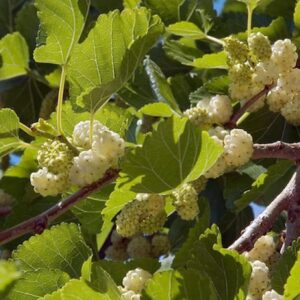

Morus alba Nikita White™
Nikita White Mulberry
- Main interest:
- abundant crops of seedless ,sweet, white fruit, self-fertile, compact habit
- Exposure:
- full sun to partial shade
- Soil humidity:
- moist soil; well drained
- Flower colour:
- yellowish-green
- Fragrance:
- Non-fragrant
- Flowering period:
- April to May
- Foliage:
- glossy green
- USDA Hardiness:
- zone 5a: -29 °C (-20 °F) View Zone Map
- Mature height & width:
- height: 20 ft (6 m) width: 15 ft (4.5 m)
- Use:
- fruit production, street tree, specimen
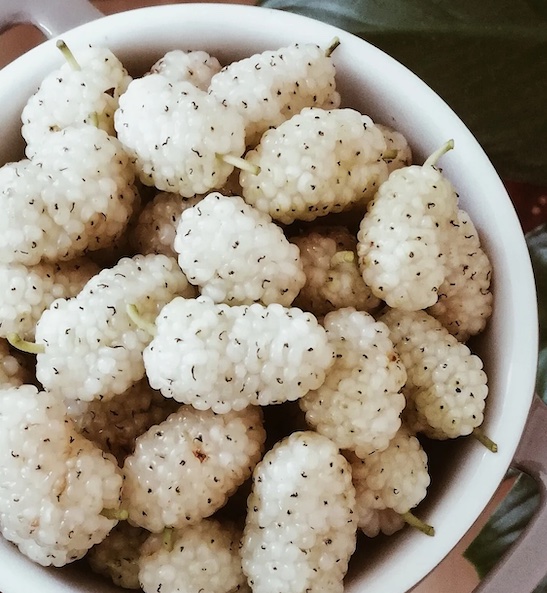
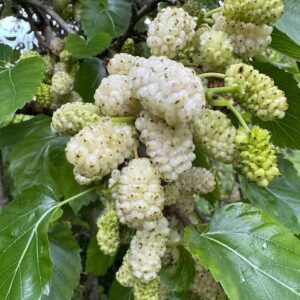
Morus alba Nikita White™, also known as Nikita White Mulberry, is prized for its ornamental value as well as its abundant crops of white, seedless fruit. The berries (drupes) resemble blackberries in shape and are considered large compared to other mulberries, averaging about 2.5 cm in length.
Unlike many novelty white mulberry cultivars, Nikita White Mulberry is highly valued for its exceptional eating quality. The fruit is soft and extremely sweet, with a delicate honey-like flavour and subtle floral notes. For best flavour, allow the mulberries to fully ripen and sweeten on the tree. Their taste is lighter and fresher than the richer, wine-like flavour of darker mulberries. The fruit is excellent for fresh eating and for use in baked goods, jams, and syrups, and can also be dried to further concentrate its sweetness. An added bonus is that, because the drupes are white, they won’t stain hands, clothing, or walkways.
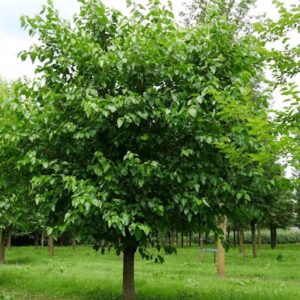
A unique variety originating from Crimea, Nikita White Mulberry plant has a naturally compact growth habit, forming an attractive small tree that can grow up to 6 m (20 ft) tall but is easily maintained at a smaller size with regular pruning. Prune this compact white mulberry tree in late fall or winter to avoid bleeding of milky sap. The glossy green foliage turns yellow in autumn before dropping, and the leaves can be dried and steeped for tea.
Small yellowish-green flowers bloom in late April to early May and are self-fertile. Once established, Nikita White mulberry trees are very productive and can yield up to 9 kg (20 lb) of fruit per tree beginning in late June. Birds tend to prefer darker mulberry varieties, so crop loss is minimal. Trees typically begin bearing fruit within 2–3 years after planting.
Well adapted to a wide range of soils, Nikita White Mulberry plant grows best in full sun to partial shade. Mulberries are generally pest and disease resistant. This cultivar was selected for its cold hardiness - to at least Zone 5a (-29 °C). Grow as a small tree close to where you can easily harvest the fruit, or allow it to grow larger to provide ample shade. Plant Morus alba Nikita White™ in a location that allows for easy pruning and harvesting to fully enjoy its sweet, reliable crop.
Morus alba has been cultivated for thousands of years in China as a primary food source for silkworms and is now naturalized in many countries, including the United States and Canada. It can hybridize with and outcompete the native red mulberry (Morus rubra), so be sure to check provincial regulations and municipal bylaws before planting.
- Main interest:
- abundant crops of seedless ,sweet, white fruit, self-fertile, compact habit
- Exposure:
- full sun to partial shade
- Soil humidity:
- moist soil; well drained
- Flower colour:
- yellowish-green
- Fragrance:
- Non-fragrant
- Flowering period:
- April to May
- Foliage:
- glossy green
- USDA Hardiness:
- zone 5a: -29 °C (-20 °F) View Zone Map
- Mature height & width:
- height: 20 ft (6 m) width: 15 ft (4.5 m)
- Use:
- fruit production, street tree, specimen
Morus alba Nikita White™, also known as Nikita White Mulberry, is prized for its ornamental value as well as its abundant crops of white, seedless fruit. The berries (drupes) resemble blackberries in shape and are considered large compared to other mulberries, averaging about 2.5 cm in length.
Unlike many novelty white mulberry cultivars, Nikita White Mulberry is highly valued for its exceptional eating quality. The fruit is soft and extremely sweet, with a delicate honey-like flavour and subtle floral notes. For best flavour, allow the mulberries to fully ripen and sweeten on the tree. Their taste is lighter and fresher than the richer, wine-like flavour of darker mulberries. The fruit is excellent for fresh eating and for use in baked goods, jams, and syrups, and can also be dried to further concentrate its sweetness. An added bonus is that, because the drupes are white, they won’t stain hands, clothing, or walkways.
A unique variety originating from Crimea, Nikita White Mulberry plant has a naturally compact growth habit, forming an attractive small tree that can grow up to 6 m (20 ft) tall but is easily maintained at a smaller size with regular pruning. Prune this compact white mulberry tree in late fall or winter to avoid bleeding of milky sap. The glossy green foliage turns yellow in autumn before dropping, and the leaves can be dried and steeped for tea.
Small yellowish-green flowers bloom in late April to early May and are self-fertile. Once established, Nikita White mulberry trees are very productive and can yield up to 9 kg (20 lb) of fruit per tree beginning in late June. Birds tend to prefer darker mulberry varieties, so crop loss is minimal. Trees typically begin bearing fruit within 2–3 years after planting.
Well adapted to a wide range of soils, Nikita White Mulberry plant grows best in full sun to partial shade. Mulberries are generally pest and disease resistant. This cultivar was selected for its cold hardiness - to at least Zone 5a (-29 °C). Grow as a small tree close to where you can easily harvest the fruit, or allow it to grow larger to provide ample shade. Plant Morus alba Nikita White™ in a location that allows for easy pruning and harvesting to fully enjoy its sweet, reliable crop.
Morus alba has been cultivated for thousands of years in China as a primary food source for silkworms and is now naturalized in many countries, including the United States and Canada. It can hybridize with and outcompete the native red mulberry (Morus rubra), so be sure to check provincial regulations and municipal bylaws before planting.
Synonym(s): Morus alba 'Staroye Derevo #2'
Also known as: White Mulberry Tree, White Mulberry Plant, Staroye Derevo #2 White Mulberry, White-fruited Mulberry, Compact White Mulberry
Related products
-
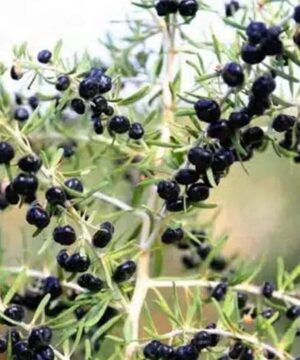
Lycium ruthenicum
Black Goji Berry, Russian Box Thorn, Black Fruit Wolfberry $15.99 - $42.99 Read more This product has multiple variants. The options may be chosen on the product page -

Ribes uva-crispa 'Pixwell'
Pixwell Gooseberry, European Gooseberry Out of stock Read more -
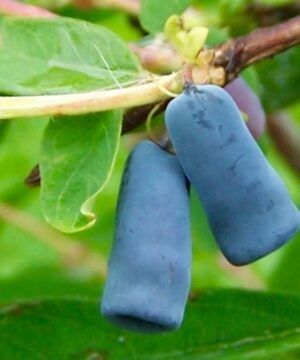
Lonicera caerulea 'Berry Blue' (early-season)
Berry Blue Haskap (Honeyberry) $16.99 - $45.99 Read more This product has multiple variants. The options may be chosen on the product page -
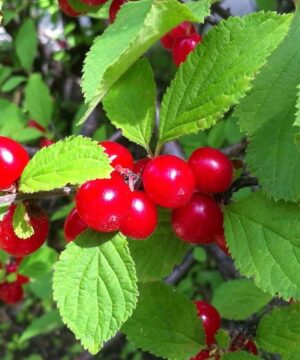
Prunus tomentosa
Nanking Cherry Bush, Manchu Cherry, Downy Cherry $17.99 Read more This product has multiple variants. The options may be chosen on the product page


