




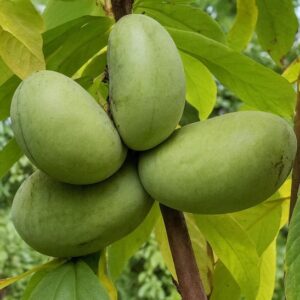

Asimina triloba KSU Atwood™
KSU Atwood Pawpaw
$69.99
- Main interest:
- early ripening and tasty fruit, heavy crops
- Exposure:
- full sun to partial shade
- Soil humidity:
- moist to wet soil; well drained
- Flower colour:
- purple brown
- Fragrance:
- Non-fragrant
- Flowering period:
- May to June
- Foliage:
- green turning yellow in autumn
- USDA Hardiness:
- zone 5a: -29 °C (-20 °F) View Zone Map
- Mature height & width:
- height: 20 ft (6 m) width: 30 ft (9 m)
- Use:
- fruit production, orchard, specimen
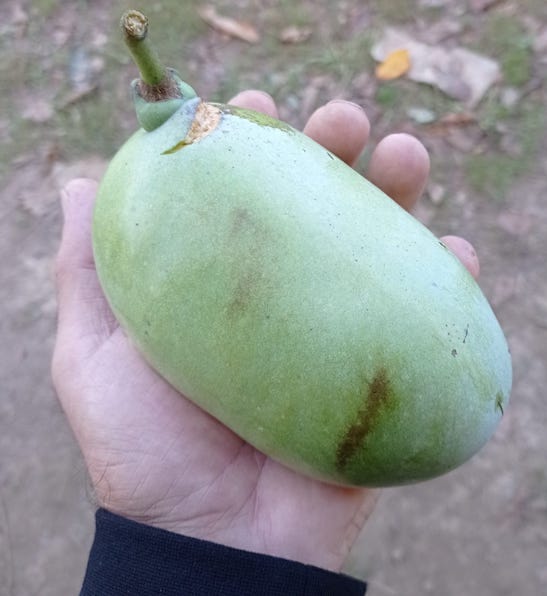
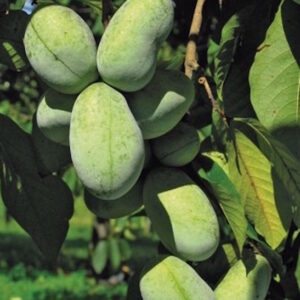
Atwood Pawpaw (Asimina triloba KSU - Atwood™) is an early-ripening variety noted for its exceptionally heavy crops, producing up to 150 or more fruits per mature tree. This selection is especially prized for the rich, delicious flavour of its fruit and was the first variety released from the unique breeding program at Kentucky State University.
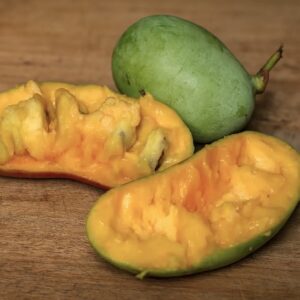
The unique flavour of pawpaw fruit is often described as a blend of banana, pineapple, and mango, with a smooth, custard-like texture. It can be eaten fresh, added to salads, or used in preserves, pies, vinaigrettes, and ice cream. This delicacy is rarely found in grocery stores, as the fruit is fragile and does not ship or store well.
KSU Atwood pawpaw tree is slow growing with a pyramidal shape, reaching heights of up to 6 m (20 ft). Six-petalled, purplish-brown flowers bloom in May and June. While not showy, KSU Atwood Pawpaw plant is quite intriguing. The tropical-looking, elliptical green leaves can grow up to 30 cm (1 ft) long and turn a bright yellow before dropping in autumn.
Pawpaws typically begin bearing fruit within two to three years. The mango-shaped fruit ripens from September to October, with KSU Atwood often ripening earlier. Harvest fruit as soon as it is ready to avoid losses to squirrels and raccoons. Pawpaw tree is native to North America, and cultivars are hardy to zone 5a : -29 °C (-20 °F). Trees prefer well-drained, moist to wet soils. Best fruit production occurs in full sun, though plants will also grow in partial shade.
Although pawpaw is a very low-maintenance tree, cross-pollination is required. Plant two different seedlings or cultivars nearby for best results; native Asimina triloba or Asimina triloba ‘Potomac’ are excellent companions. KSU Atwood pawpaw plants typically have a lifespan of 20–30 years.
Enjoy this tropical-looking plant and fruit—without the hassle of bringing it indoors for winter!
- Main interest:
- early ripening and tasty fruit, heavy crops
- Exposure:
- full sun to partial shade
- Soil humidity:
- moist to wet soil; well drained
- Flower colour:
- purple brown
- Fragrance:
- Non-fragrant
- Flowering period:
- May to June
- Foliage:
- green turning yellow in autumn
- USDA Hardiness:
- zone 5a: -29 °C (-20 °F) View Zone Map
- Mature height & width:
- height: 20 ft (6 m) width: 30 ft (9 m)
- Use:
- fruit production, orchard, specimen
Atwood Pawpaw (Asimina triloba KSU - Atwood™) is an early-ripening variety noted for its exceptionally heavy crops, producing up to 150 or more fruits per mature tree. This selection is especially prized for the rich, delicious flavour of its fruit and was the first variety released from the unique breeding program at Kentucky State University.
The unique flavour of pawpaw fruit is often described as a blend of banana, pineapple, and mango, with a smooth, custard-like texture. It can be eaten fresh, added to salads, or used in preserves, pies, vinaigrettes, and ice cream. This delicacy is rarely found in grocery stores, as the fruit is fragile and does not ship or store well.
KSU Atwood pawpaw tree is slow growing with a pyramidal shape, reaching heights of up to 6 m (20 ft). Six-petalled, purplish-brown flowers bloom in May and June. While not showy, KSU Atwood Pawpaw plant is quite intriguing. The tropical-looking, elliptical green leaves can grow up to 30 cm (1 ft) long and turn a bright yellow before dropping in autumn.
Pawpaws typically begin bearing fruit within two to three years. The mango-shaped fruit ripens from September to October, with KSU Atwood often ripening earlier. Harvest fruit as soon as it is ready to avoid losses to squirrels and raccoons. Pawpaw tree is native to North America, and cultivars are hardy to zone 5a : -29 °C (-20 °F). Trees prefer well-drained, moist to wet soils. Best fruit production occurs in full sun, though plants will also grow in partial shade.
Although pawpaw is a very low-maintenance tree, cross-pollination is required. Plant two different seedlings or cultivars nearby for best results; native Asimina triloba or Asimina triloba ‘Potomac’ are excellent companions. KSU Atwood pawpaw plants typically have a lifespan of 20–30 years.
Enjoy this tropical-looking plant and fruit—without the hassle of bringing it indoors for winter!
Synonym(s): Asimina triloba 'KSU 8-2'
Also known as: KSU Atwood Pawpaw Plant, KSU Atwood Pawpaw Tree, KSU Atwood Paw Paw, KSU 8-2 Paw paw Fruit Tree, Common Pawpaw, American Pawpaw, Canadian Pawpaw, American Papaw, Kentucky Banana
Related products
-
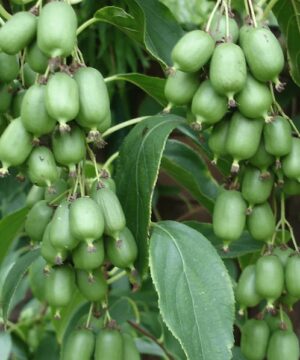
Actinidia arguta 'Issaï' (self-fertile) (female)
Issaï Hardy Kiwi Vine, Issaï Kiwi Plant, Issaï Self-pollinating Kiwi $19.99 - $54.99 Read more This product has multiple variants. The options may be chosen on the product page -
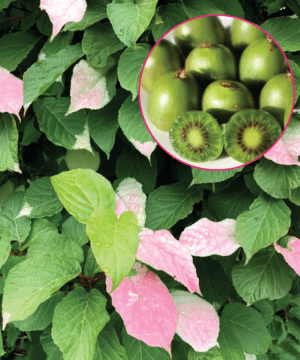
Actinidia kolomikta 'September Sun' (female)
September Sun Arctic Kiwi, Female Arctic Kiwi, Female Kolomikta Vine, Variegated Kiwi Vine $17.99 - $48.99 Read more This product has multiple variants. The options may be chosen on the product page -
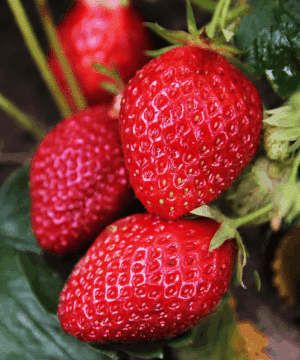
Fragaria 'Albion' (everbearing)
Albion Strawberry Out of stock Read more -

Prunus x kerrasis 'Crimson Passion' (early-season) (self-fertile)
Crimson Passion Dwarf Cherry Tree, Crimson Passion Sour Cherry Tree $19.99 - $54.99 Read more This product has multiple variants. The options may be chosen on the product page


