




Diospyros virginiana 'Meader'
Persimmon Tree, Meader Persimmon, Meader American Persimmon
- Main interest:
- self-fertile variety, large tasty orange fruit, colourful fall foliage
- Exposure:
- full sun
- Soil humidity:
- dry to moist soil; well drained
- Flower colour:
- greenish-yellow
- Fragrance:
- Fragrant
- Flowering period:
- June
- Foliage:
- green turning yellow and red in the fall
- USDA Hardiness:
- zone 4b: -31.5 °C (-25 °F) View Zone Map
- Mature height & width:
- height: 30 ft (9 m) width: 20 ft (6 m)
- Use:
- fruit production, orchard, specimen
Meader Persimmon (Diospyros virginiana ‘Meader’) is an outstanding self-fertile American persimmon tree, producing good crops of sweet, flavorful fruit. Selected by Professor Elwyn Meader, a noted American botanist and plant breeder, this cold-hardy cultivar was recognized for its exceptional fruit quality as well as its ornamental appeal.
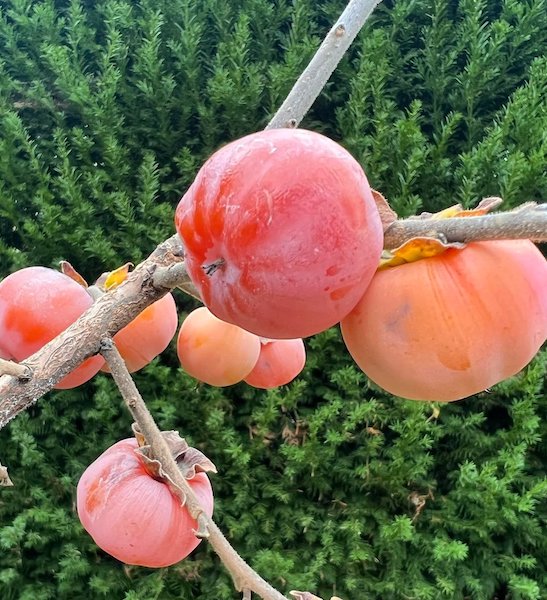
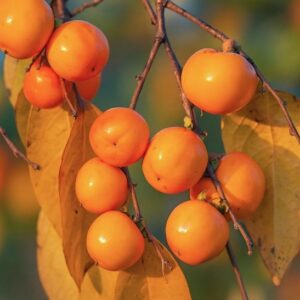
The light orange fruit typically contains few to no seeds and is large by American persimmon standards, measuring approximately 2 inches (5 cm) in diameter - about the size of an apricot. The fruit is excellent eaten fresh off the tree and is also well suited for baking, preserves, and a wide range of desserts. This astringent persimmon variety should be allowed to soften, at which point the flavor becomes intensely sweet and is often described to be ‘candy-like'. Unripe persimmons are highly astringent - an experience most people only endure once! Harvest begins in fall. Birds and squirrels are attracted to the fruit in urban settings, while deer are known to relish it in rural areas. Meader persimmon trees typically begin fruiting within 2–3 years.
Diospyros virginiana is a deciduous tree with an upright growth habit and a rounded to oval crown. Meader persimmon tree is relatively compact compared to other American persimmons, maturing to a maximum height of 9 m (30 ft) with a spread of approximately 6 m (20 ft). With regular pruning, it can be maintained as a small to medium-sized tree under 4 m (12 ft).
Meader American Persimmon produces both male and female flowers on the same tree in June and does not require another variety for pollination. The greenish-yellow flowers are modest, with male flowers borne in clusters and female flowers appearing singly.
In addition to its fruiting qualities, Meader American Persimmon is a superior ornamental specimen. Its attractive, tropical-looking glossy green foliage turns brilliant shades of yellow and red in autumn. The bark of Diospyros virginiana is highly distinctive - dark gray to nearly black, with deep furrows and blocky plates resembling alligator scales -making the tree easily recognizable in winter. A member of the ebony family (Ebenaceae), persimmon wood is extremely hard and was historically used for golf club heads and billiard cues.
American persimmon is native from Connecticut to Kansas and south to Florida and Texas. While its fruit is smaller than that of Asian persimmons, American persimmons are significantly more cold hardy. Meader American persimmon is hardy to zone 4b (–31.5 °C).
Meader Self-fertile American Persimmon prefers full sun, though it will tolerate partial shade. It grows best in moist, well-drained soil but becomes drought tolerant once established. No serious insect or disease problems are known. If fruit does not fully ripen on the tree before frost, it can be further matured in cold storage; temperatures should remain above 4 °C to prevent deterioration of fruit texture.
Be patient - persimmons are among the last plants to break dormancy in spring. Watering while dormant will not accelerate growth and may even be detrimental. In cool springs, persimmon trees may take longer than expected to leaf out; they simply require more heat to awaken.
- Main interest:
- self-fertile variety, large tasty orange fruit, colourful fall foliage
- Exposure:
- full sun
- Soil humidity:
- dry to moist soil; well drained
- Flower colour:
- greenish-yellow
- Fragrance:
- Fragrant
- Flowering period:
- June
- Foliage:
- green turning yellow and red in the fall
- USDA Hardiness:
- zone 4b: -31.5 °C (-25 °F) View Zone Map
- Mature height & width:
- height: 30 ft (9 m) width: 20 ft (6 m)
- Use:
- fruit production, orchard, specimen
Meader Persimmon (Diospyros virginiana ‘Meader’) is an outstanding self-fertile American persimmon tree, producing good crops of sweet, flavorful fruit. Selected by Professor Elwyn Meader, a noted American botanist and plant breeder, this cold-hardy cultivar was recognized for its exceptional fruit quality as well as its ornamental appeal.
The light orange fruit typically contains few to no seeds and is large by American persimmon standards, measuring approximately 2 inches (5 cm) in diameter - about the size of an apricot. The fruit is excellent eaten fresh off the tree and is also well suited for baking, preserves, and a wide range of desserts. This astringent persimmon variety should be allowed to soften, at which point the flavor becomes intensely sweet and is often described to be ‘candy-like'. Unripe persimmons are highly astringent - an experience most people only endure once! Harvest begins in fall. Birds and squirrels are attracted to the fruit in urban settings, while deer are known to relish it in rural areas. Meader persimmon trees typically begin fruiting within 2–3 years.
Diospyros virginiana is a deciduous tree with an upright growth habit and a rounded to oval crown. Meader persimmon tree is relatively compact compared to other American persimmons, maturing to a maximum height of 9 m (30 ft) with a spread of approximately 6 m (20 ft). With regular pruning, it can be maintained as a small to medium-sized tree under 4 m (12 ft).
Meader American Persimmon produces both male and female flowers on the same tree in June and does not require another variety for pollination. The greenish-yellow flowers are modest, with male flowers borne in clusters and female flowers appearing singly.
In addition to its fruiting qualities, Meader American Persimmon is a superior ornamental specimen. Its attractive, tropical-looking glossy green foliage turns brilliant shades of yellow and red in autumn. The bark of Diospyros virginiana is highly distinctive - dark gray to nearly black, with deep furrows and blocky plates resembling alligator scales -making the tree easily recognizable in winter. A member of the ebony family (Ebenaceae), persimmon wood is extremely hard and was historically used for golf club heads and billiard cues.
American persimmon is native from Connecticut to Kansas and south to Florida and Texas. While its fruit is smaller than that of Asian persimmons, American persimmons are significantly more cold hardy. Meader American persimmon is hardy to zone 4b (–31.5 °C).
Meader Self-fertile American Persimmon prefers full sun, though it will tolerate partial shade. It grows best in moist, well-drained soil but becomes drought tolerant once established. No serious insect or disease problems are known. If fruit does not fully ripen on the tree before frost, it can be further matured in cold storage; temperatures should remain above 4 °C to prevent deterioration of fruit texture.
Be patient - persimmons are among the last plants to break dormancy in spring. Watering while dormant will not accelerate growth and may even be detrimental. In cool springs, persimmon trees may take longer than expected to leaf out; they simply require more heat to awaken.
Also known as: Self-fertile American Persimmon Tree, Self-fertile Eastern Persimmon Plant, Self-fruitful Persimmon, Meader Common Persimmon, Meader Eastern Persimmon
Related products
-

Prunus x kerrasis 'Crimson Passion' (early-season) (self-fertile)
Crimson Passion Dwarf Cherry Tree, Crimson Passion Sour Cherry Tree$21.99 - $60.99$17.59 - $48.79 Read more This product has multiple variants. The options may be chosen on the product page -

Ribes uva-crispa 'Pixwell'
Pixwell Gooseberry, European Gooseberry Out of stock Read more -
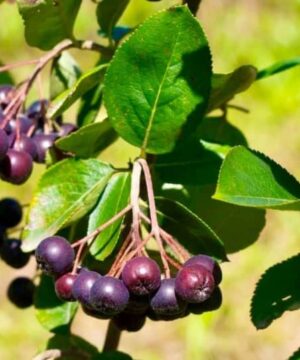
Aronia melanocarpa 'McKenzie'
McKenzie Black Chokeberry, Aronia Berry Out of stock Read more -
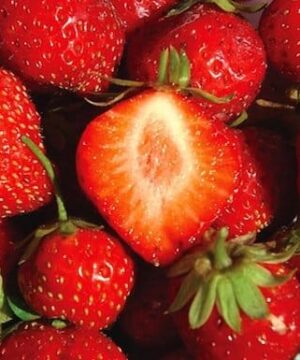
Fragaria x 'Mara des bois' (everbearing)
Everbearing Strawberry, Mara des Bois Strawberry$7.99$6.39 Read more This product has multiple variants. The options may be chosen on the product page


