




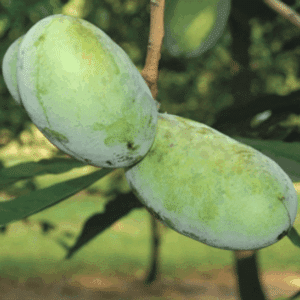
Asimina triloba 'NC-1'
Paw paw Tree, NC-1 Pawpaw
- Main interest:
- early ripening, large sweet tasty fruit with light orange flesh, fall colour
- Exposure:
- full sun to partial shade
- Soil humidity:
- moist to wet soil; well drained
- Flower colour:
- purple brown
- Flowering period:
- May to June
- Foliage:
- green turning yellow in autumn
- USDA Hardiness:
- zone 5a: -29 °C (-20 °F) View Zone Map
- Mature height & width:
- height: 20 ft (6 m) width: 30 ft (9 m)
- Use:
- fruit production, orchard, specimen
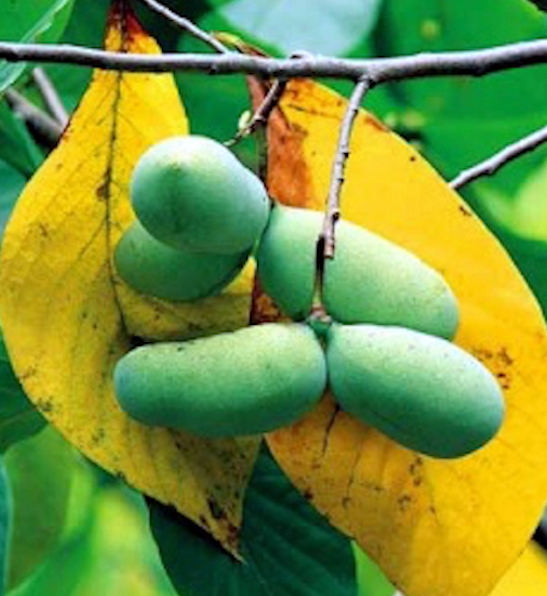
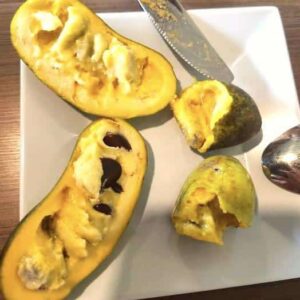
NC-1 Paw paw tree (Asimina triloba 'NC-1') is a unique variety from Canada. It is early ripening and has abundant crops of large, flavourful fruit with light orange flesh. The fruits of this Canadian Pawpaw grow up to 16 cm (6 inches) in length. They begin as yellowish-green fruits, and mature to a dark brown in autumn. Pawpaw fruit has a custard-like texture, and many say it tastes like a mixture of banana, pineapple and mango - a delicious tropical trio right here in Canada!
The ripe fruit of this Paw paw tree can be eaten raw, and is commonly used in pies, preserves, salads, vinaigrettes, and ice cream. Due to the fruit being perishable, we do not often see it fresh in our stores. Growing it in our home gardens is becoming more popular as people realize how delicious it is. Harvest your ripe fruit before the raccoons and squirrels do, as they love it too. Do not eat unripe fruit, as it can cause stomach upset.
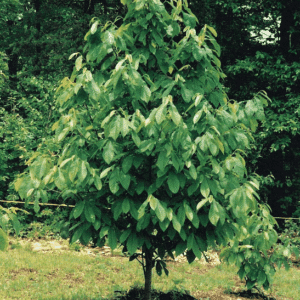
Asimina triloba 'NC-1' has a rounded crown, and is considered a small tree at 6 m (20 feet) in height. The flowers are interesting, but not showy. The leaves stay green into fall, and turn a bright yellow as autumn progresses. Long-lived, and Hardy to Zone 5a (-29 °C (-20 °F)), NC-1, Paw paw plant survives 20 to 30 years.
NC-1 Pawpaw prefers full sun to partial shade with moist to wet, well-drained soil. For fruit production, at least two different varieties are required for pollination. Consider planting the native Asimina triloba (seedling) or another variety, close by.
- Main interest:
- early ripening, large sweet tasty fruit with light orange flesh, fall colour
- Exposure:
- full sun to partial shade
- Soil humidity:
- moist to wet soil; well drained
- Flower colour:
- purple brown
- Flowering period:
- May to June
- Foliage:
- green turning yellow in autumn
- USDA Hardiness:
- zone 5a: -29 °C (-20 °F) View Zone Map
- Mature height & width:
- height: 20 ft (6 m) width: 30 ft (9 m)
- Use:
- fruit production, orchard, specimen
NC-1 Paw paw tree (Asimina triloba 'NC-1') is a unique variety from Canada. It is early ripening and has abundant crops of large, flavourful fruit with light orange flesh. The fruits of this Canadian Pawpaw grow up to 16 cm (6 inches) in length. They begin as yellowish-green fruits, and mature to a dark brown in autumn. Pawpaw fruit has a custard-like texture, and many say it tastes like a mixture of banana, pineapple and mango - a delicious tropical trio right here in Canada!
The ripe fruit of this Paw paw tree can be eaten raw, and is commonly used in pies, preserves, salads, vinaigrettes, and ice cream. Due to the fruit being perishable, we do not often see it fresh in our stores. Growing it in our home gardens is becoming more popular as people realize how delicious it is. Harvest your ripe fruit before the raccoons and squirrels do, as they love it too. Do not eat unripe fruit, as it can cause stomach upset.
Asimina triloba 'NC-1' has a rounded crown, and is considered a small tree at 6 m (20 feet) in height. The flowers are interesting, but not showy. The leaves stay green into fall, and turn a bright yellow as autumn progresses. Long-lived, and Hardy to Zone 5a (-29 °C (-20 °F)), NC-1, Paw paw plant survives 20 to 30 years.
NC-1 Pawpaw prefers full sun to partial shade with moist to wet, well-drained soil. For fruit production, at least two different varieties are required for pollination. Consider planting the native Asimina triloba (seedling) or another variety, close by.
Also known as: NC-1 Paw Paw Plant, NC-1 Pawpaw Tree, Early-ripening Pawpaw, Canadian Pawpaw
Related products
-
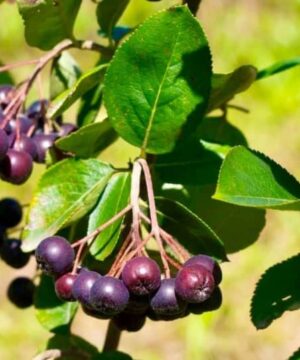
Aronia melanocarpa 'McKenzie'
McKenzie Black Chokeberry, Aronia Berry Out of stock Read more This product has multiple variants. The options may be chosen on the product page -
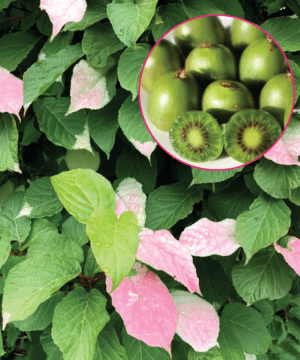
Actinidia kolomikta 'September Sun' (female)
September Sun Arctic Kiwi, Female Arctic Kiwi, Female Kolomikta Vine, Variegated Kiwi Vine $17.99 - $48.99 Read more This product has multiple variants. The options may be chosen on the product page -
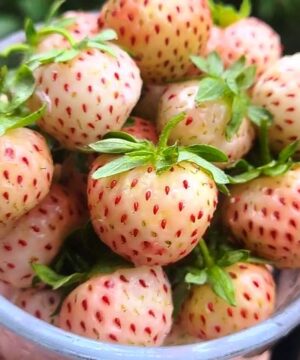
Fragaria x 'Albino'
Albino Strawberry (Pineberry)$13.99 - $35.99$10.99 - $29.99 Read more This product has multiple variants. The options may be chosen on the product page -
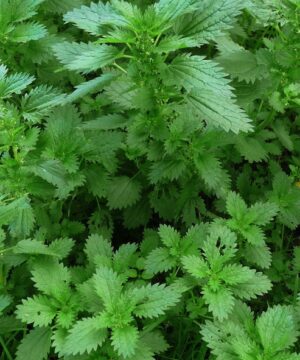
Urtica dioica
Stinging Nettle, Common Nettle Out of stock Read more


