




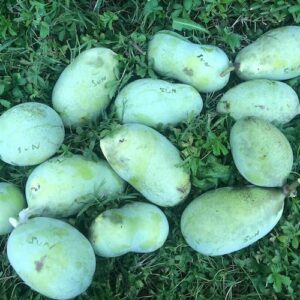
Asimina triloba 'Sunflower'
Paw Paw Fruit Tree, Sunflower Paw Paw
$69.99
- Main interest:
- very reliable and abundant crop, large sweet fruit
- Exposure:
- full sun to partial shade
- Soil humidity:
- moist to wet soil; well drained
- Flower colour:
- purple brown
- Fragrance:
- Non-fragrant
- Flowering period:
- May to June
- Foliage:
- green turning yellow in autumn
- USDA Hardiness:
- zone 5a: -29 °C (-20 °F) View Zone Map
- Mature height & width:
- height: 20 ft (6 m) width: 30 ft (9 m)
- Use:
- fruit production, orchard, specimen
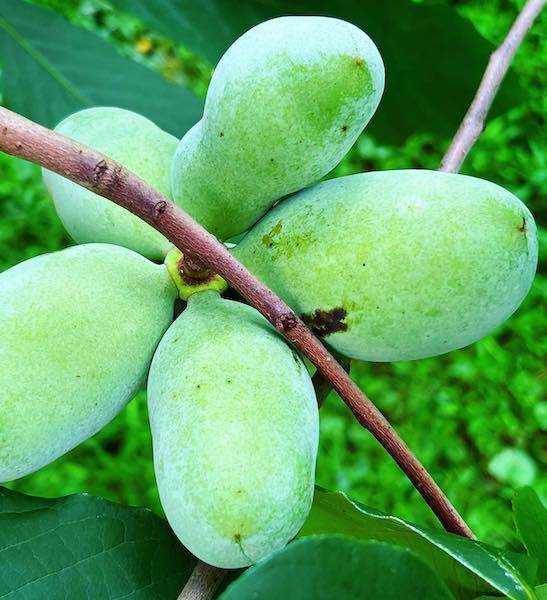
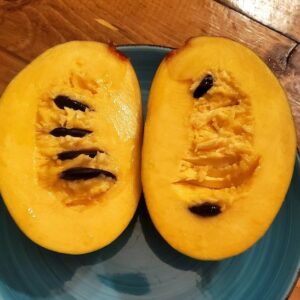
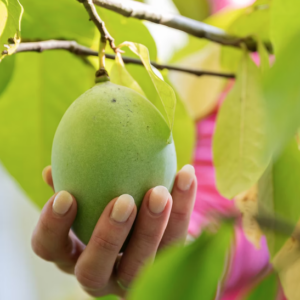
Sunflower Paw Paw fruit tree (Asimina triloba ‘Sunflower’) is one of the most reliable and productive paw paw varieties available. Prized for its high yields of large, mango-shaped yellow fruit (averaging 155 g), this variety produces sweet, delicious fruit with creamy, butter-yellow flesh.
The unique flavour of paw paw fruit is often described as a blend of banana, pineapple, and mango, with a rich, custard-like texture. Sunflower paw paw is also noted for its complex caramel, vanilla, and nutty undertones. The skin is removed prior to eating, and only the soft flesh is consumed. Paw paws can be enjoyed fresh or used in salads, preserves, pies, vinaigrettes, and ice cream. Fruit ripens from September to October—be sure to harvest promptly before squirrels and raccoons discover them!
Paw paws are highly nutritious, being rich in vitamin C and magnesium, and containing a higher protein content than bananas, apples, or oranges. You will rarely find paw paw fruit in grocery stores, as the fruit is delicate and does not ship or store well.
Sunflower paw paw fruit trees are typically slow-growing with a pyramidal shape, reaching heights of up to 6 m (20 ft). Their tropical-looking, elliptical green leaves can grow up to 30 cm (1 ft) long and turn a striking bright yellow before dropping in autumn. Cup-shaped, purplish-brown flowers bloom in May and June. While not showy, they are quite distinctive and interesting.
‘Sunflower’ is considered a classic variety, originally discovered in the wild by dedicated fruit explorers. Naturally resistant to most diseases and pests, pawpaw is one of North America’s few native fruit trees. Sunflower paw paw tree is hardy to zone 5a : -29 °C (-20 °F), making it especially exciting to grow a tropical-looking fruit tree that thrives outdoors through snowy winters.
Sunflower paw paw plant is a low-maintenance and prefers well-drained, moist to wet soils. Best fruit production occurs in full sun, though trees will grow in partial shade. Due to its heavy productivity, fruit clusters may require thinning to maximize fruit size and flesh-to-seed ratio.
Although ‘Sunflower’ is considered partially self-pollinating by some growers, planting another seedling or cultivar nearby will significantly improve fruit set. Paw paw trees typically live 20–30 years, offering many seasons of exceptional fruit production.
- Main interest:
- very reliable and abundant crop, large sweet fruit
- Exposure:
- full sun to partial shade
- Soil humidity:
- moist to wet soil; well drained
- Flower colour:
- purple brown
- Fragrance:
- Non-fragrant
- Flowering period:
- May to June
- Foliage:
- green turning yellow in autumn
- USDA Hardiness:
- zone 5a: -29 °C (-20 °F) View Zone Map
- Mature height & width:
- height: 20 ft (6 m) width: 30 ft (9 m)
- Use:
- fruit production, orchard, specimen
Sunflower Paw Paw fruit tree (Asimina triloba ‘Sunflower’) is one of the most reliable and productive paw paw varieties available. Prized for its high yields of large, mango-shaped yellow fruit (averaging 155 g), this variety produces sweet, delicious fruit with creamy, butter-yellow flesh.
The unique flavour of paw paw fruit is often described as a blend of banana, pineapple, and mango, with a rich, custard-like texture. Sunflower paw paw is also noted for its complex caramel, vanilla, and nutty undertones. The skin is removed prior to eating, and only the soft flesh is consumed. Paw paws can be enjoyed fresh or used in salads, preserves, pies, vinaigrettes, and ice cream. Fruit ripens from September to October—be sure to harvest promptly before squirrels and raccoons discover them!
Paw paws are highly nutritious, being rich in vitamin C and magnesium, and containing a higher protein content than bananas, apples, or oranges. You will rarely find paw paw fruit in grocery stores, as the fruit is delicate and does not ship or store well.
Sunflower paw paw fruit trees are typically slow-growing with a pyramidal shape, reaching heights of up to 6 m (20 ft). Their tropical-looking, elliptical green leaves can grow up to 30 cm (1 ft) long and turn a striking bright yellow before dropping in autumn. Cup-shaped, purplish-brown flowers bloom in May and June. While not showy, they are quite distinctive and interesting.
‘Sunflower’ is considered a classic variety, originally discovered in the wild by dedicated fruit explorers. Naturally resistant to most diseases and pests, pawpaw is one of North America’s few native fruit trees. Sunflower paw paw tree is hardy to zone 5a : -29 °C (-20 °F), making it especially exciting to grow a tropical-looking fruit tree that thrives outdoors through snowy winters.
Sunflower paw paw plant is a low-maintenance and prefers well-drained, moist to wet soils. Best fruit production occurs in full sun, though trees will grow in partial shade. Due to its heavy productivity, fruit clusters may require thinning to maximize fruit size and flesh-to-seed ratio.
Although ‘Sunflower’ is considered partially self-pollinating by some growers, planting another seedling or cultivar nearby will significantly improve fruit set. Paw paw trees typically live 20–30 years, offering many seasons of exceptional fruit production.
Also known as: Sunflower Paw Paw Fruit Tree, Sunflower Paw Paw Tree, Sunflower Paw Paw plant, Common Pawpaw, American Pawpaw, Canadian Pawpaw, American Papaw, Kentucky Banana
Related products
-
Sambucus canadensis 'Aurea'
Golden Elder, Golden American Elderberry Out of stock Read more -
Lycium ruthenicum
Black Goji Berry, Russian Box Thorn, Black Fruit Wolfberry $15.99 - $42.99 Read more This product has multiple variants. The options may be chosen on the product page -
Fragaria x 'Mara des bois' (everbearing)
Everbearing Strawberry, Mara des Bois Strawberry $6.99 - $39.99 Read more This product has multiple variants. The options may be chosen on the product page -
Fragaria 'Albion' (everbearing)
Albion Strawberry Out of stock Read more


