



Asimina triloba Shenandoah® PETERSON™
Shenandoah Pawpaw
$69.99
- Main interest:
- very large (up to 1 lb each) and flavourful fruit
- Exposure:
- full sun to partial shade
- Soil humidity:
- moist to wet soil; well drained
- Flower colour:
- purple brown
- Fragrance:
- Non-fragrant
- Flowering period:
- May to June
- Foliage:
- green turning yellow in autumn
- USDA Hardiness:
- zone 5a: -29 °C (-20 °F) View Zone Map
- Mature height & width:
- height: 20 ft (6 m) width: 30 ft (9 m)
- Use:
- fruit production, orchard, specimen
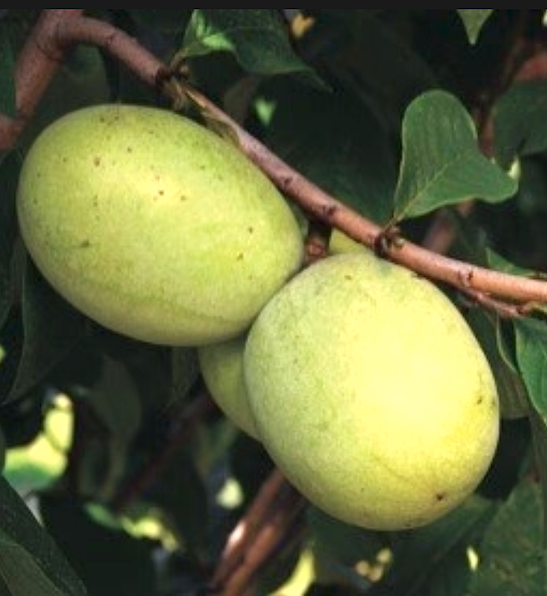
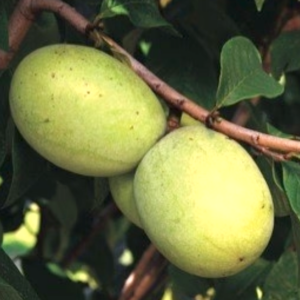
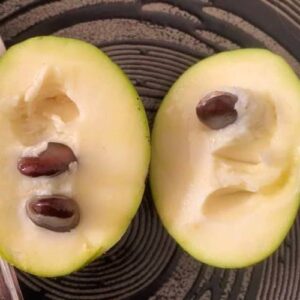
Shenandoah Pawpaw (Asimina triloba Shenandoah® PETERSON™) is an exceptional cultivar known for its very large fruits, weighing up to 454 g (1 lb). This fleshy variety contains only 6% seed, offering a high yield of smooth, creamy yellow flesh with a sweet, mellow flavour and a succulent, custard-like texture.
‘Shenandoah’ is a PETERSON™ Pawpaw, bred by Neal Peterson. He describes it as a consistent hit at farmers’ markets and a favourite among first-time pawpaw eaters. It is also widely regarded as one of the best varieties for commercial production, making it a superior choice for both home gardeners and growers.
Pawpaws are highly nutritious fruits, rich in vitamin C and magnesium, and contain more protein than bananas, apples, or oranges. Enjoy them fresh, in salads, or incorporated into preserves, pies, vinaigrettes, and ice cream. Due to their delicate nature and short shelf life, pawpaws are rarely found in grocery stores.
Shenandoah Pawpaw trees are slow-growing with a pyramidal habit, eventually reaching 6 m (20 ft) in height. In May and June, they produce six-petalled, cup-shaped purplish-brown flowers that, while not showy, are quite distinctive. The tropical-looking, elliptical green leaves can reach 30 cm (1 ft) in length and turn a bright yellow before dropping in autumn.
Trees typically begin bearing fruit within two to three years, with mango-shaped fruits ripening from September to October—often just in time to compete with squirrels and raccoons.
A native North American species, Shenandoah pawpaw tree is hardy to zone 5a : -29 °C (-20 °F). Despite its tropical appearance, you do not need to bring it inside for the winter!
‘Shenandoah’ is a low-maintenance plant that prefers well-drained, moist to wet soils. Best fruit production occurs in full sun, though Shenandoah pawpaw plant will tolerate partial shade.
For proper cross-pollination and reliable fruit set, two different seedlings or cultivars are required. Native Asimina triloba or ‘Potomac’ pawpaw make excellent pollination partners.
Pawpaw trees typically have a lifespan of 20–30 years, providing many seasons of fruit production.
- Main interest:
- very large (up to 1 lb each) and flavourful fruit
- Exposure:
- full sun to partial shade
- Soil humidity:
- moist to wet soil; well drained
- Flower colour:
- purple brown
- Fragrance:
- Non-fragrant
- Flowering period:
- May to June
- Foliage:
- green turning yellow in autumn
- USDA Hardiness:
- zone 5a: -29 °C (-20 °F) View Zone Map
- Mature height & width:
- height: 20 ft (6 m) width: 30 ft (9 m)
- Use:
- fruit production, orchard, specimen
Shenandoah Pawpaw (Asimina triloba Shenandoah® PETERSON™) is an exceptional cultivar known for its very large fruits, weighing up to 454 g (1 lb). This fleshy variety contains only 6% seed, offering a high yield of smooth, creamy yellow flesh with a sweet, mellow flavour and a succulent, custard-like texture.
‘Shenandoah’ is a PETERSON™ Pawpaw, bred by Neal Peterson. He describes it as a consistent hit at farmers’ markets and a favourite among first-time pawpaw eaters. It is also widely regarded as one of the best varieties for commercial production, making it a superior choice for both home gardeners and growers.
Pawpaws are highly nutritious fruits, rich in vitamin C and magnesium, and contain more protein than bananas, apples, or oranges. Enjoy them fresh, in salads, or incorporated into preserves, pies, vinaigrettes, and ice cream. Due to their delicate nature and short shelf life, pawpaws are rarely found in grocery stores.
Shenandoah Pawpaw trees are slow-growing with a pyramidal habit, eventually reaching 6 m (20 ft) in height. In May and June, they produce six-petalled, cup-shaped purplish-brown flowers that, while not showy, are quite distinctive. The tropical-looking, elliptical green leaves can reach 30 cm (1 ft) in length and turn a bright yellow before dropping in autumn.
Trees typically begin bearing fruit within two to three years, with mango-shaped fruits ripening from September to October—often just in time to compete with squirrels and raccoons.
A native North American species, Shenandoah pawpaw tree is hardy to zone 5a : -29 °C (-20 °F). Despite its tropical appearance, you do not need to bring it inside for the winter!
‘Shenandoah’ is a low-maintenance plant that prefers well-drained, moist to wet soils. Best fruit production occurs in full sun, though Shenandoah pawpaw plant will tolerate partial shade.
For proper cross-pollination and reliable fruit set, two different seedlings or cultivars are required. Native Asimina triloba or ‘Potomac’ pawpaw make excellent pollination partners.
Pawpaw trees typically have a lifespan of 20–30 years, providing many seasons of fruit production.
Synonym(s): Asimina triloba 'Wansevwan'
Also known as: Peterson Shenandoah Pawpaw Tree, Shenandoah Pawpaw plant, Shenandoah Pawpaw Fruit Tree, Peteron Pawpaws, Wansevwan Pawpaw, Common Pawpaw, American Pawpaw, Canadian Pawpaw, American Papaw, Kentucky Banana
Related products
-
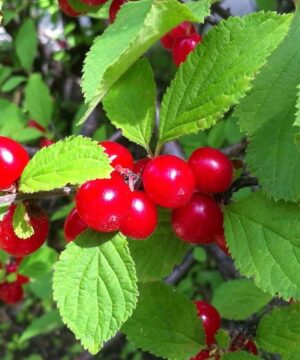
Prunus tomentosa
Nanking Cherry Bush, Manchu Cherry, Downy Cherry $17.99 Read more This product has multiple variants. The options may be chosen on the product page -

Prunus x kerrasis 'Crimson Passion' (early-season) (self-fertile)
Crimson Passion Dwarf Cherry Tree, Crimson Passion Sour Cherry Tree $19.99 - $54.99 Read more This product has multiple variants. The options may be chosen on the product page -
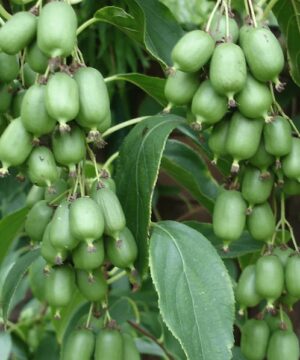
Actinidia arguta 'Issaï' (self-fertile) (female)
Issaï Hardy Kiwi Vine, Issaï Kiwi Plant, Issaï Self-pollinating Kiwi $19.99 - $54.99 Read more This product has multiple variants. The options may be chosen on the product page -
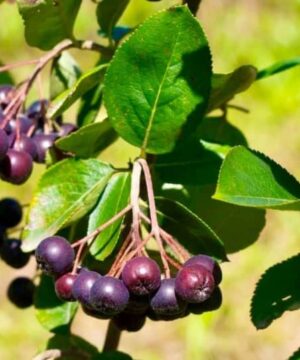
Aronia melanocarpa 'McKenzie'
McKenzie Black Chokeberry, Aronia Berry Out of stock Read more This product has multiple variants. The options may be chosen on the product page


