




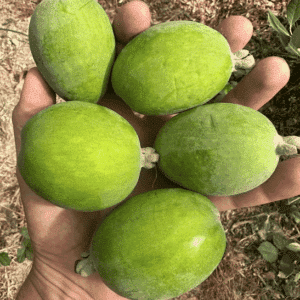

Acca sellowiana 'Kakariki' (Feijoa sellowiana 'Kakariki')
Kakariki Pineapple Guava Plant, Kakariki Feijoa Plant
$59.99 $49.99
- Main interest:
- very early ripening, large, flavourful sweet fruit with thin tasty skin, high yield
- Exposure:
- full sun to partial shade
- Soil humidity:
- moist soil
- Flower colour:
- white, pink, red
- Fragrance:
- mildly fragrant
- Flowering period:
- June to July
- Foliage:
- green above and silvery-green beneath
- USDA Hardiness:
- zone 7a: -18 °C (0 °F) View Zone Map
- Mature height & width:
- height: 8 ft (2.5 m) width: 6 ft (1.8 m)
- Use:
- fruit production, container
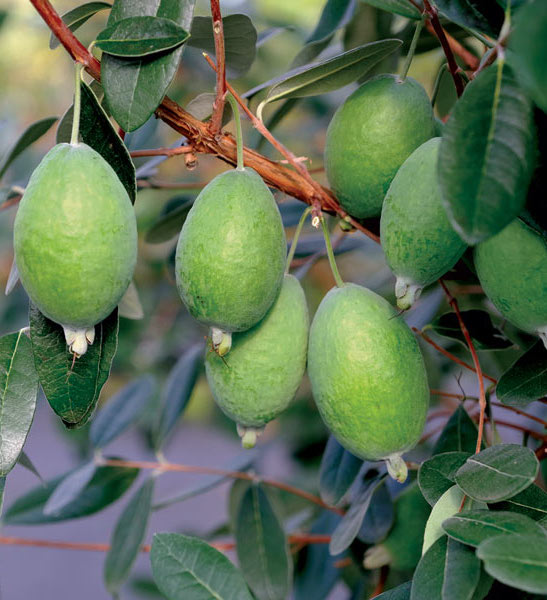
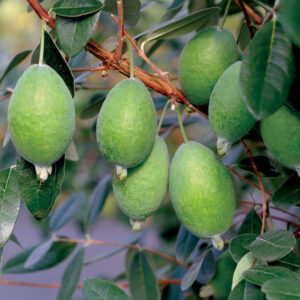
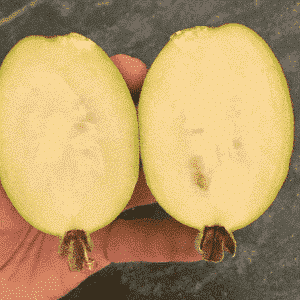
Kakariki Pineapple Guava plant (Acca sellowiana 'Kakariki') is a very early ripening and exceptionally high yielding cultivar. The very large, and especially flavourful fruit has thin, edible skin, and a sweet, pineapple mint taste. The Kakariki Guavasteen fruit can be eaten raw, or used for jams, pies etc. The 1 to 3 inch long fruit is pear shaped. Kakariki Pineapple Guava Bush may take 3 to 4 years to start producing, but can live up to 50 years!
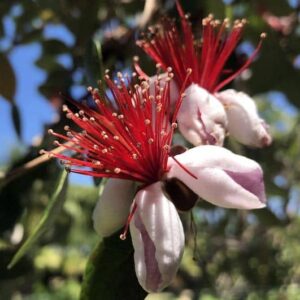
Kakariki Feijoa plant is an attractive small, multi-branched shrub or small tree. The leathery leaves are green on top, and silvery-green underneath. The prolific, tropical looking flowers have edible white and pink petals with beautiful red stamens and taste like cotton candy. The flowers give colour to salads or to plates as a pretty garnish; and can be used as a sweet ingredient in jams.
Native to parts of South America, most of the selection and breeding work with Acca (Feijoa) has been carried out in New Zealand. Kakariki Feijoa Bush is slow growing to 6 to 8 feet in height, and is beautiful as a potted specimen to be brought indoors during cooler temperatures. Acca is hardy to zone 7a.
Pineapple Guava Fruit Tree is pest and disease-resistant, and prefers a sunny spot to maximize fruit production. However, it will tolerate partial shade. Plant two varieties (for example, 'Kakariki' with 'Anatoki') for cross pollination and best fruit production. Kakariki Feijoa tree is considered partially self-fertile. Planting another variety nearby is recommended for cross pollination and improve fruit production
- Main interest:
- very early ripening, large, flavourful sweet fruit with thin tasty skin, high yield
- Exposure:
- full sun to partial shade
- Soil humidity:
- moist soil
- Flower colour:
- white, pink, red
- Fragrance:
- mildly fragrant
- Flowering period:
- June to July
- Foliage:
- green above and silvery-green beneath
- USDA Hardiness:
- zone 7a: -18 °C (0 °F) View Zone Map
- Mature height & width:
- height: 8 ft (2.5 m) width: 6 ft (1.8 m)
- Use:
- fruit production, container
Kakariki Pineapple Guava plant (Acca sellowiana 'Kakariki') is a very early ripening and exceptionally high yielding cultivar. The very large, and especially flavourful fruit has thin, edible skin, and a sweet, pineapple mint taste. The Kakariki Guavasteen fruit can be eaten raw, or used for jams, pies etc. The 1 to 3 inch long fruit is pear shaped. Kakariki Pineapple Guava Bush may take 3 to 4 years to start producing, but can live up to 50 years!
Kakariki Feijoa plant is an attractive small, multi-branched shrub or small tree. The leathery leaves are green on top, and silvery-green underneath. The prolific, tropical looking flowers have edible white and pink petals with beautiful red stamens and taste like cotton candy. The flowers give colour to salads or to plates as a pretty garnish; and can be used as a sweet ingredient in jams.
Native to parts of South America, most of the selection and breeding work with Acca (Feijoa) has been carried out in New Zealand. Kakariki Feijoa Bush is slow growing to 6 to 8 feet in height, and is beautiful as a potted specimen to be brought indoors during cooler temperatures. Acca is hardy to zone 7a.
Pineapple Guava Fruit Tree is pest and disease-resistant, and prefers a sunny spot to maximize fruit production. However, it will tolerate partial shade. Plant two varieties (for example, 'Kakariki' with 'Anatoki') for cross pollination and best fruit production. Kakariki Feijoa tree is considered partially self-fertile. Planting another variety nearby is recommended for cross pollination and improve fruit production
Synonym(s): Feijoa sellowiana 'Kakariki', Orthostemon sellowianus 'Kakariki'
Also known as: Kakariki Feijoa Tree, Kakariki Feijoa Bush, Kakariki Pineapple Guava Bush, Kakariki Guavasteen, Early Ripening Pineapple Guava Fruit Tree
Related products
-
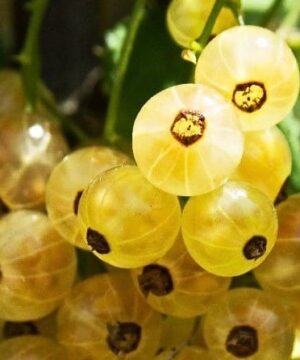
Ribes rubrum 'White Pearl' (late-season)
White Pearl White Currant$15.99$13.99 Read more This product has multiple variants. The options may be chosen on the product page -
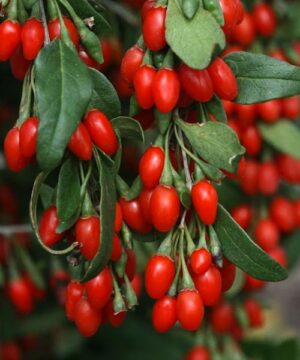
Lycium barbarum 'Firecracker'
Firecracker Goji Berry, Chinese wolfberry, Matrimony vine $16.99 - $45.99 Read more This product has multiple variants. The options may be chosen on the product page -
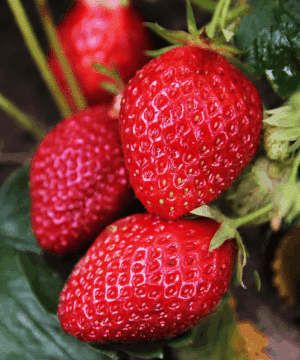
Fragaria 'Albion' (everbearing)
Albion Strawberry Out of stock Read more -
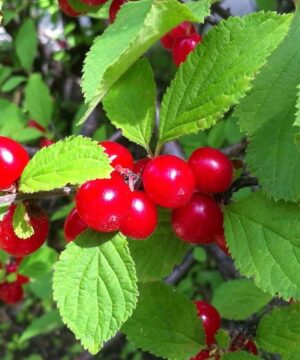
Prunus tomentosa
Nanking Cherry Bush, Manchu Cherry, Downy Cherry $17.99 Read more This product has multiple variants. The options may be chosen on the product page


