




Ziziphus jujuba Black Sea™
Jujube Tree, Black Sea Jujube, Black Sea Chinese Date
$87.99 $70.39
- Main interest:
- heavy crop, rich sweet chocolate brown fruit, early ripening variety
- Exposure:
- full sun
- Soil humidity:
- moist soil; well drained
- Flower colour:
- greenish-yellow
- Fragrance:
- Mildly fragrant
- Flowering period:
- June to July
- Foliage:
- green
- USDA Hardiness:
- zone 5a: -29 °C (-20 °F) View Zone Map
- Mature height & width:
- height: 15 ft (4.5 m) width: 12 ft (3.7 m)
- Use:
- fruit production, orchard, specimen, planter
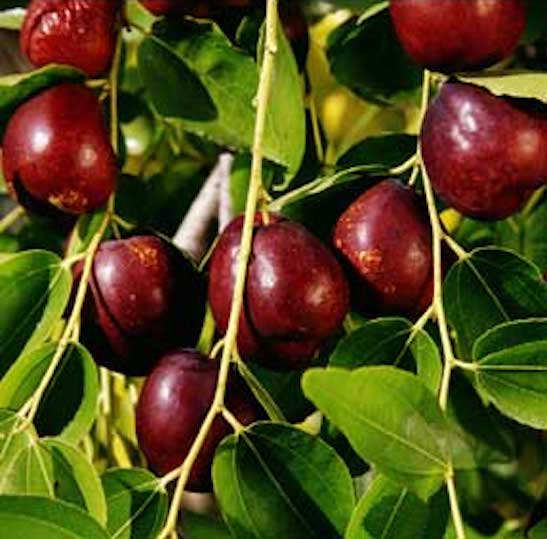
Black Sea Jujube tree (Ziziphus jujuba Black Sea™) is a distinctive fruiting tree producing crisp fruit that softens into a rich, date-like texture as it ripens. Also known as a Black Sea Chinese Date, this early-ripening Jujube variety originated in southern Ukraine and is prized for its reliable yields and excellent fruit quality.
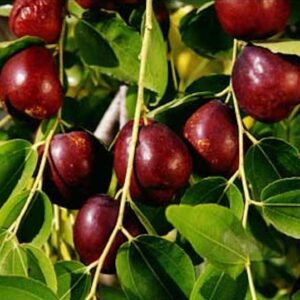
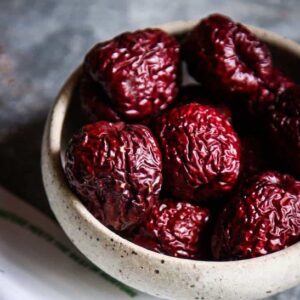
The fruit is best harvested once it turns brown on the tree, as sugar content increases with colour development. Typically about 3 cm long and ovate in shape, each fruit contains a single central stone. Sweet with subtle floral notes, the Black Sea Jujube may be eaten while still crisp and apple-like, or allowed to wrinkle and become chewy and date-like. Though it resembles the fruit of the date palm, the two are not related. When fully ripe, the fruit of Black Sea Jujube tree develops a striking dark chocolate-coloured skin that distinguishes this cultivar and is often noted for its more robust flavour than other jujubes.
Often chosen for its consistency and large fruit size, Black Sea Chinese Date ripens earlier than many other jujube varieties and maintains good fruit quality in shorter growing seasons, where later cultivars can be unpredictable.
The fruit is highly versatile in the kitchen. When crisp, simply remove the pit and slice the fruit for salads, or use it as a substitute for apples in pies. When fully softened, it can replace raisins or dates in baking and cooking. Black Sea red date is exceptionally nutritious, containing high levels of vitamin C, antioxidants, and minerals. It has a long history of use in traditional Asian medicine and cuisine, where it is eaten fresh or dried, candied, and used in juices, jams, wines, and teas.
The Chinese Jujube plant is a deciduous fruiting and ornamental tree well suited to small gardens or large containers, reaching approximately 4.5 m (15 ft) tall but easily maintained at a smaller size through pruning. Be sure to cut any suckering shoots as you see them. The greyish bark and attractive branching pattern add winter interest once the leaves have fallen.
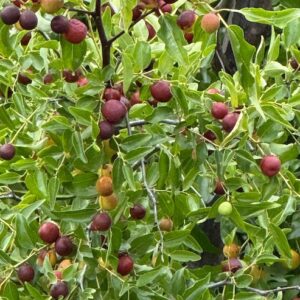
Leaves are glossy green, often bearing thorns at their base; they are alternately arranged along the branches and turn yellow in autumn. The small flowers are greenish-yellow and mildly fragrant; while not showy, the overall bloom is long-lasting and a good nectar source for pollinators. Although Black Sea Jujube tree is somewhat self-fertile, planting another variety nearby - such as Ziziphus jujuba ‘Autumn Beauty’ - will improve fruit set and yield. Trees typically begin bearing fruit within 2–3 years of planting.
Preferring a full-sun location, jujube trees develop a deep taproot and are drought-tolerant once established. For best fruit production, provide consistently moist, well-drained soil. Black Sea Chinese Date is cold-hardy to Zone 5a (-29 °C) and is generally free from pests and diseases.
A unique and rewarding addition to any plant collection, Black Sea jujube plant is sure to become a standout feature -and a conversation starter - in the garden.
- Main interest:
- heavy crop, rich sweet chocolate brown fruit, early ripening variety
- Exposure:
- full sun
- Soil humidity:
- moist soil; well drained
- Flower colour:
- greenish-yellow
- Fragrance:
- Mildly fragrant
- Flowering period:
- June to July
- Foliage:
- green
- USDA Hardiness:
- zone 5a: -29 °C (-20 °F) View Zone Map
- Mature height & width:
- height: 15 ft (4.5 m) width: 12 ft (3.7 m)
- Use:
- fruit production, orchard, specimen, planter
Black Sea Jujube tree (Ziziphus jujuba Black Sea™) is a distinctive fruiting tree producing crisp fruit that softens into a rich, date-like texture as it ripens. Also known as a Black Sea Chinese Date, this early-ripening Jujube variety originated in southern Ukraine and is prized for its reliable yields and excellent fruit quality.
The fruit is best harvested once it turns brown on the tree, as sugar content increases with colour development. Typically about 3 cm long and ovate in shape, each fruit contains a single central stone. Sweet with subtle floral notes, the Black Sea Jujube may be eaten while still crisp and apple-like, or allowed to wrinkle and become chewy and date-like. Though it resembles the fruit of the date palm, the two are not related. When fully ripe, the fruit of Black Sea Jujube tree develops a striking dark chocolate-coloured skin that distinguishes this cultivar and is often noted for its more robust flavour than other jujubes.
Often chosen for its consistency and large fruit size, Black Sea Chinese Date ripens earlier than many other jujube varieties and maintains good fruit quality in shorter growing seasons, where later cultivars can be unpredictable.
The fruit is highly versatile in the kitchen. When crisp, simply remove the pit and slice the fruit for salads, or use it as a substitute for apples in pies. When fully softened, it can replace raisins or dates in baking and cooking. Black Sea red date is exceptionally nutritious, containing high levels of vitamin C, antioxidants, and minerals. It has a long history of use in traditional Asian medicine and cuisine, where it is eaten fresh or dried, candied, and used in juices, jams, wines, and teas.
The Chinese Jujube plant is a deciduous fruiting and ornamental tree well suited to small gardens or large containers, reaching approximately 4.5 m (15 ft) tall but easily maintained at a smaller size through pruning. Be sure to cut any suckering shoots as you see them. The greyish bark and attractive branching pattern add winter interest once the leaves have fallen.
Leaves are glossy green, often bearing thorns at their base; they are alternately arranged along the branches and turn yellow in autumn. The small flowers are greenish-yellow and mildly fragrant; while not showy, the overall bloom is long-lasting and a good nectar source for pollinators. Although Black Sea Jujube tree is somewhat self-fertile, planting another variety nearby - such as Ziziphus jujuba ‘Autumn Beauty’ - will improve fruit set and yield. Trees typically begin bearing fruit within 2–3 years of planting.
Preferring a full-sun location, jujube trees develop a deep taproot and are drought-tolerant once established. For best fruit production, provide consistently moist, well-drained soil. Black Sea Chinese Date is cold-hardy to Zone 5a (-29 °C) and is generally free from pests and diseases.
A unique and rewarding addition to any plant collection, Black Sea jujube plant is sure to become a standout feature -and a conversation starter - in the garden.
Synonym(s): Ziziphus jujuba 'Yalta #1'
Also known as: Black Sea Chinese Jujube, Common Jujube, Black Sea Jujube Plant, Black Sea Chinese Jujube Plant, Chinese Jujube Tree, Chinese Date tree, Red Date Plant, Yalta #1 Jujube, Early-ripening Jujube
Related products
-
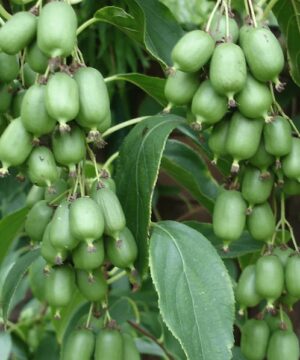
Actinidia arguta 'Issaï' (self-fertile) (female)
Issaï Hardy Kiwi Vine, Issaï Kiwi Plant, Issaï Self-pollinating Kiwi$21.99 - $60.99$17.59 - $48.79 Read more This product has multiple variants. The options may be chosen on the product page -
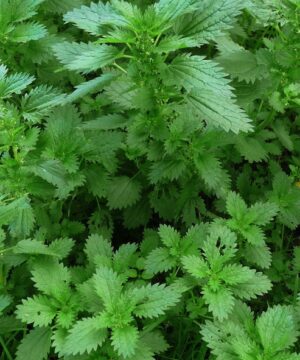
Urtica dioica
Stinging Nettle, Common Nettle Out of stock Read more -

Rubus fruticosus 'Chester'
Chester Hardy Blackberry, Chester Blackberry Out of stock Read more -
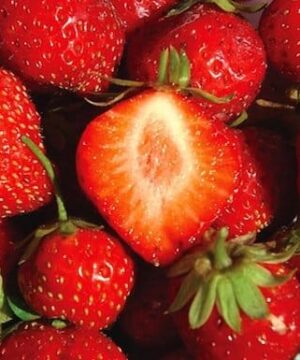
Fragaria x 'Mara des bois' (everbearing)
Everbearing Strawberry, Mara des Bois Strawberry$7.99$6.39 Read more This product has multiple variants. The options may be chosen on the product page


