




Morus alba x rubra 'Early Bird'
Early Bird Mulberry
- Main interest:
- abundant yield, very early ripening, sweet jet black fruit, self-fertile
- Exposure:
- full sun to partial shade
- Soil humidity:
- moist soil; well drained
- Flower colour:
- yellowish-green
- Fragrance:
- Non-fragrant
- Flowering period:
- April to May
- Foliage:
- glossy green
- USDA Hardiness:
- zone 4b: -31.5 °C (-25 °F) View Zone Map
- Mature height & width:
- height: 20 ft (6 m) width: 15 ft (4.5 m)
- Use:
- fruit production, street tree, specimen
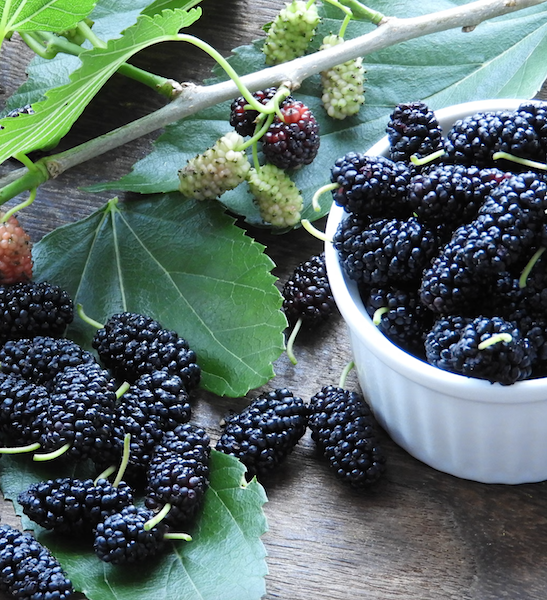
Early Bird Mulberry (Morus alba x rubra 'Early Bird') is prized for its exceptionally early ripening and beautiful, jet-black fruit. This highly productive cultivar - aptly named Early Bird - is ready to harvest as early as June. Plant it alongside Illinois Everbearing to enjoy fresh mulberries all season long.
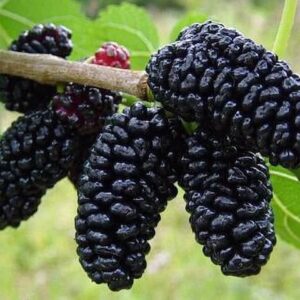
The dark fruit measures about 4 cm (1.5 in) in length and resembles a blackberry. For the best flavor, wait until the berries reach their deepest, darkest color before harvesting. The fruit is sweet, rich, and juicy, similar to a blackberry but softer and with few to no seeds. It is excellent for fresh eating and is often used as a topping for yogurt, cereal, and ice cream, as well as in jams, sauces, and baked goods. Birds - and some backyard mammals - will also be drawn to the irresistible fruit.
A popular cold-hardy cultivar (Zone 4b: −31.5 °C), Early Bird Mulberry tree has a spreading habit and can reach up to 6 m (20 ft) tall, though it can easily be kept smaller with pruning. Prune Early Bird Mulberry tree during dormancy to avoid sap bleeding.
The inconspicuous yellow-green male and female flowers are self-fertile, and Early Bird Mulberry typically begins bearing fruit in its second or third year after planting. This cultivar also features large, dark green foliage, making it a handsome ornamental addition to the landscape.
Easy to grow, Morus alba x rubra 'Early Bird' prefers moist, well-drained soil and full sun to partial shade. Once established, it becomes relatively drought tolerant. Mulberries are generally free from serious pests and diseases.
- Main interest:
- abundant yield, very early ripening, sweet jet black fruit, self-fertile
- Exposure:
- full sun to partial shade
- Soil humidity:
- moist soil; well drained
- Flower colour:
- yellowish-green
- Fragrance:
- Non-fragrant
- Flowering period:
- April to May
- Foliage:
- glossy green
- USDA Hardiness:
- zone 4b: -31.5 °C (-25 °F) View Zone Map
- Mature height & width:
- height: 20 ft (6 m) width: 15 ft (4.5 m)
- Use:
- fruit production, street tree, specimen
Early Bird Mulberry (Morus alba x rubra 'Early Bird') is prized for its exceptionally early ripening and beautiful, jet-black fruit. This highly productive cultivar - aptly named Early Bird - is ready to harvest as early as June. Plant it alongside Illinois Everbearing to enjoy fresh mulberries all season long.
The dark fruit measures about 4 cm (1.5 in) in length and resembles a blackberry. For the best flavor, wait until the berries reach their deepest, darkest color before harvesting. The fruit is sweet, rich, and juicy, similar to a blackberry but softer and with few to no seeds. It is excellent for fresh eating and is often used as a topping for yogurt, cereal, and ice cream, as well as in jams, sauces, and baked goods. Birds - and some backyard mammals - will also be drawn to the irresistible fruit.
A popular cold-hardy cultivar (Zone 4b: −31.5 °C), Early Bird Mulberry tree has a spreading habit and can reach up to 6 m (20 ft) tall, though it can easily be kept smaller with pruning. Prune Early Bird Mulberry tree during dormancy to avoid sap bleeding.
The inconspicuous yellow-green male and female flowers are self-fertile, and Early Bird Mulberry typically begins bearing fruit in its second or third year after planting. This cultivar also features large, dark green foliage, making it a handsome ornamental addition to the landscape.
Easy to grow, Morus alba x rubra 'Early Bird' prefers moist, well-drained soil and full sun to partial shade. Once established, it becomes relatively drought tolerant. Mulberries are generally free from serious pests and diseases.
Synonym(s): Morus spp. 'Early Bird'
Also known as: Early Bird Mulberry tree, Early Bird Red Mulberry, Hybrid Mulberry, Early Bird Mulberry Hybrid, Early-ripening Mulberry, Early-fruiting Mulberry
Related products
-

Rubus fruticosus 'Chester'
Chester Hardy Blackberry, Chester Blackberry Out of stock Read more -
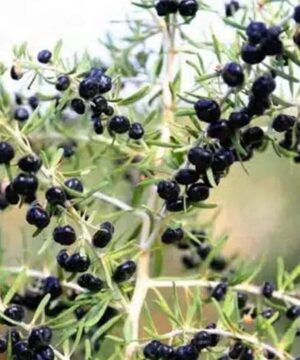
Lycium ruthenicum
Black Goji Berry, Russian Box Thorn, Black Fruit Wolfberry $15.99 - $42.99 Read more This product has multiple variants. The options may be chosen on the product page -
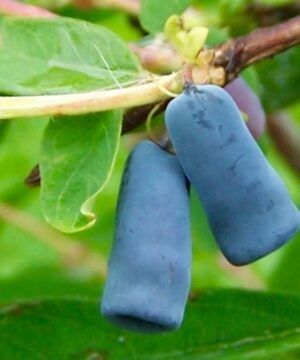
Lonicera caerulea 'Berry Blue' (early-season)
Berry Blue Haskap (Honeyberry) $16.99 - $45.99 Read more This product has multiple variants. The options may be chosen on the product page -
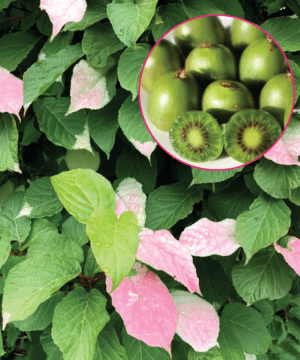
Actinidia kolomikta 'September Sun' (female)
September Sun Arctic Kiwi, Female Arctic Kiwi, Female Kolomikta Vine, Variegated Kiwi Vine $17.99 - $48.99 Read more This product has multiple variants. The options may be chosen on the product page


