


Diospyros virginiana 'Szukis'
Common Persimmon, Szukis Persimmon, Szukis American Persimmon
- Main interest:
- compact habit, well-suited for container, early ripening, large sweet fruit, fall colour
- Exposure:
- full sun
- Soil humidity:
- dry to moist soil; well drained
- Flower colour:
- pale yellow
- Fragrance:
- Fragrant
- Flowering period:
- June
- Foliage:
- green turning yellow and red in the fall
- USDA Hardiness:
- zone 4b: -31.5 °C (-25 °F) View Zone Map
- Mature height & width:
- height: 20 ft (6 m) width: 10 ft (3 m)
- Use:
- fruit production, orchard, specimen, container
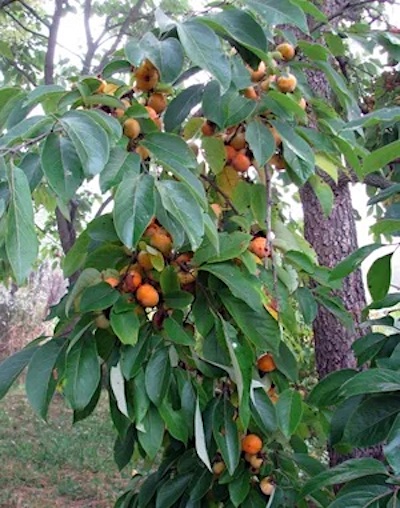
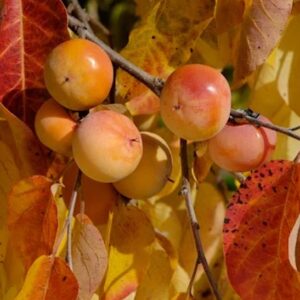
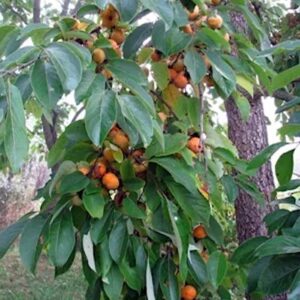
Diospyros virginiana ‘Szukis’ is an exceptionally attractive common persimmon that naturally grows more compact than many other varieties. With pruning, Szukis Persimmon can be maintained as a small tree of approximately 3 m (10 ft), making it well suited to both container growing and in-ground planting.
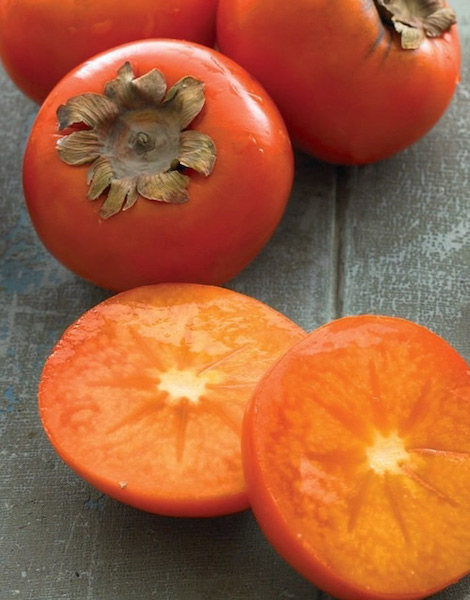
The Szuki Persimmon fruit is medium-sized, measuring about 5 cm (2 in) in diameter, and ripens to a beautiful light orange that deepens in colour as maturity approaches. Renowned for its heavy yields, Szukis common persimmon commonly produces 13 kg (30 lb) or more per tree. The fruit is exceptionally sweet and flavourful, with a rich, date-like flavour. Notably, some growers report that it remains sweet even when not fully ripe, at which stage it can be sliced. Highly regarded for fresh eating straight off the tree, Szukis American Persimmon is also excellent for drying, syrups, puddings, baking, preserves, and traditional persimmon pie.
The common persimmon tree is native from Connecticut west to Kansas, and south to Florida and Texas. Although its fruit is smaller than that of Asian persimmons, common persimmons (also known as Eastern or American persimmons) are significantly more cold hardy. The Szukis persimmon variety is hardy to zone 4b (-31.5 °C).
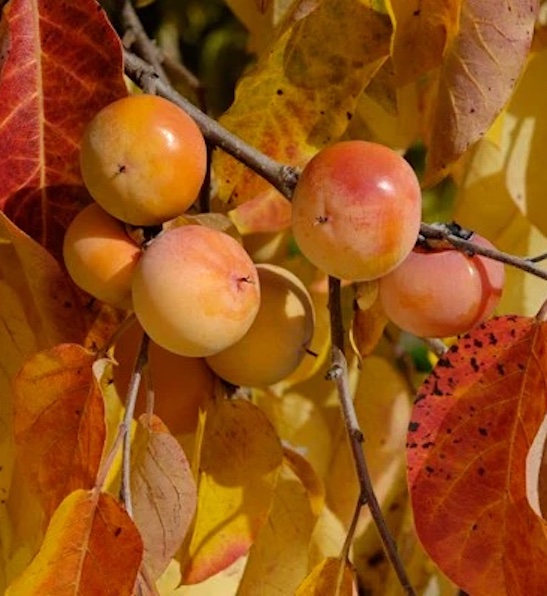
The 5–15 cm (2–6 in), ovate to elliptical leaves are glossy dark green and turn striking shades of yellow and red in autumn before dropping. Small, fragrant, pale-yellow flowers approximately 1 cm (½ in) in size bloom in June and attract pollinators. Szukis Persimmon is considered mildly self-fertile; however, planting a male persimmon (Diospyros virginiana ‘Male’) nearby will greatly enhance fruit set and overall productivity. Ripening earlier than many other varieties, harvest typically begins in late September. Birds, squirrels, and other wildlife are also drawn to the fruit, so timely harvesting is recommended.
Szukis common persimmon tree prefers full sun and grows best in moist, well-drained soil, though it tolerates drier conditions once established. No serious insect or disease problems are known. Trees typically begin bearing fruit within 2-3 years. If fruit does not fully ripen on the tree before frost, it can be further matured in cold storage; temperatures should remain above 4 °C (39 °F) to prevent deterioration of fruit texture.
Patience is essential, as persimmons are among the last trees to break dormancy in spring. Watering while the tree is dormant will not hasten growth and may be detrimental. During cool springs, Szukis American persimmon trees may leaf out later than expected - they simply require additional warmth to awaken.
- Main interest:
- compact habit, well-suited for container, early ripening, large sweet fruit, fall colour
- Exposure:
- full sun
- Soil humidity:
- dry to moist soil; well drained
- Flower colour:
- pale yellow
- Fragrance:
- Fragrant
- Flowering period:
- June
- Foliage:
- green turning yellow and red in the fall
- USDA Hardiness:
- zone 4b: -31.5 °C (-25 °F) View Zone Map
- Mature height & width:
- height: 20 ft (6 m) width: 10 ft (3 m)
- Use:
- fruit production, orchard, specimen, container
Diospyros virginiana ‘Szukis’ is an exceptionally attractive common persimmon that naturally grows more compact than many other varieties. With pruning, Szukis Persimmon can be maintained as a small tree of approximately 3 m (10 ft), making it well suited to both container growing and in-ground planting.
The Szuki Persimmon fruit is medium-sized, measuring about 5 cm (2 in) in diameter, and ripens to a beautiful light orange that deepens in colour as maturity approaches. Renowned for its heavy yields, Szukis common persimmon commonly produces 13 kg (30 lb) or more per tree. The fruit is exceptionally sweet and flavourful, with a rich, date-like flavour. Notably, some growers report that it remains sweet even when not fully ripe, at which stage it can be sliced. Highly regarded for fresh eating straight off the tree, Szukis American Persimmon is also excellent for drying, syrups, puddings, baking, preserves, and traditional persimmon pie.
The common persimmon tree is native from Connecticut west to Kansas, and south to Florida and Texas. Although its fruit is smaller than that of Asian persimmons, common persimmons (also known as Eastern or American persimmons) are significantly more cold hardy. The Szukis persimmon variety is hardy to zone 4b (-31.5 °C).
The 5–15 cm (2–6 in), ovate to elliptical leaves are glossy dark green and turn striking shades of yellow and red in autumn before dropping. Small, fragrant, pale-yellow flowers approximately 1 cm (½ in) in size bloom in June and attract pollinators. Szukis Persimmon is considered mildly self-fertile; however, planting a male persimmon (Diospyros virginiana ‘Male’) nearby will greatly enhance fruit set and overall productivity. Ripening earlier than many other varieties, harvest typically begins in late September. Birds, squirrels, and other wildlife are also drawn to the fruit, so timely harvesting is recommended.
Szukis common persimmon tree prefers full sun and grows best in moist, well-drained soil, though it tolerates drier conditions once established. No serious insect or disease problems are known. Trees typically begin bearing fruit within 2-3 years. If fruit does not fully ripen on the tree before frost, it can be further matured in cold storage; temperatures should remain above 4 °C (39 °F) to prevent deterioration of fruit texture.
Patience is essential, as persimmons are among the last trees to break dormancy in spring. Watering while the tree is dormant will not hasten growth and may be detrimental. During cool springs, Szukis American persimmon trees may leaf out later than expected - they simply require additional warmth to awaken.
Also known as: Compact Common Persimmon, Dwarf American Persimmon, Szukis Eastern Persimmon Tree, Hardy Persimmon, Early-fruiting Eastern Persimmon, Possum Wood, Jove's Fruit, Virginian Date Plum, Astringent Persimmon
Related products
-

Rubus fruticosus 'Chester'
Chester Hardy Blackberry, Chester Blackberry Out of stock Read more -
Lycium barbarum 'Firecracker'
Firecracker Goji Berry, Chinese wolfberry, Matrimony vine $16.99 - $45.99 Read more This product has multiple variants. The options may be chosen on the product page -
Humulus lupulus 'Nugget'
Nugget Hops Out of stock Read more -
Actinidia kolomikta 'Pasha' (male)
Variegated-leaf Hardy Kiwi (male), Pascha Arctic Kiwi (male), Male Kolomikta Vine $17.99 Read more This product has multiple variants. The options may be chosen on the product page


