





Aesculus hippocastanum
Horse Chestnut Tree, Common Horse Chestnut, European Horse-chestnut Tree
- Main interest:
- large compound leaf, large panicles of showy white flowers, brown fruit, attracts hummingbirds and other pollinators
- Exposure:
- full sun to partial shade
- Soil humidity:
- moist soil; well drained
- Flower colour:
- white with red and yellow markings
- Flowering period:
- May to June
- Foliage:
- green, turning yellow/brown in fall
- USDA Hardiness:
- zone 3a: -40 °C (-40 °F) View Zone Map
- Mature height & width:
- height: 65 ft (20 m) width: 53 ft (16 m)
- Use:
- specimen, fruit production, street tree, shade tree
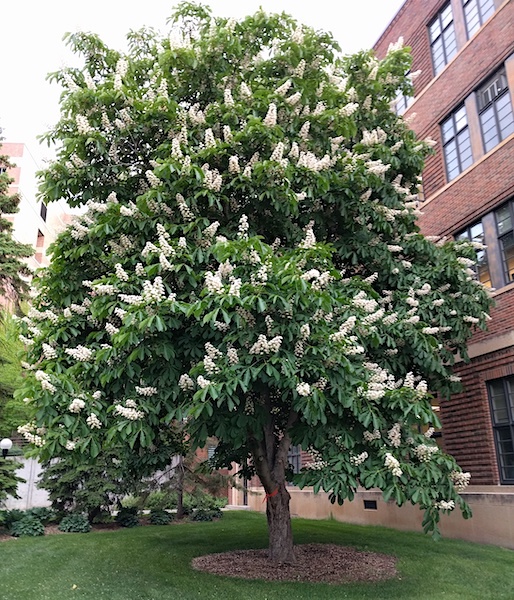
The Horse Chestnut Tree (Aesculus hippocastanum) is a medium to large deciduous tree with an upright, rounded crown. The showy flowers are stunning in spring, the shade it provides is lovely in the summer, and the yellow fall foliage make this tree a three-season beauty!
Growing to a mature height of approximately 65 feet (20 m), Common Horse Chestnut Tree is a beautiful specimen tree for large lawns and open areas. Native to the Balkans, this tree is also commonly known as European Horse Chestnut Tree.
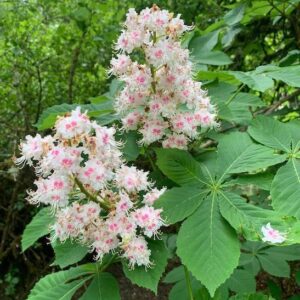
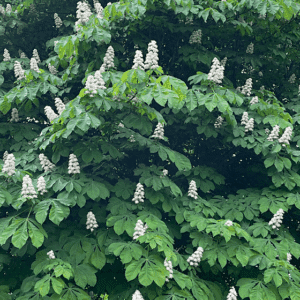
The green, palmate compound leaves emerge in the spring, each having 7 (sometimes 5) long, ovate leaflets. Mid to late spring brings what Horse Chestnut is renowned for - its gorgeous, upright, white panicled flowers. These showy flowers have patches of reddish-pink or yellow. They are attractive to hummingbirds, bees and other pollinators. The leaves turn shades of yellow to brown in autumn.
The fruits of European Horse Chestnut are 1 to 2 'horse chestnuts' encased in a spiny husk. This tree, is in fact, NOT a chestnut tree. Horsechestnut and buckeyes (Aesculus) are in the soapberry family (Sapindaceae) and produce poisonous nuts. Chestnuts (Castanea) are in the beech family (Fagaceae), and produce edible nuts.
Interestingly, the handsome (yet poisonous) horse chestnut fruits are used in a traditional European children's game called 'Conkers'. A horse chestnut (conker) is threaded onto a piece of string, and the children take turns striking each other's conker until one breaks.
- Main interest:
- large compound leaf, large panicles of showy white flowers, brown fruit, attracts hummingbirds and other pollinators
- Exposure:
- full sun to partial shade
- Soil humidity:
- moist soil; well drained
- Flower colour:
- white with red and yellow markings
- Flowering period:
- May to June
- Foliage:
- green, turning yellow/brown in fall
- USDA Hardiness:
- zone 3a: -40 °C (-40 °F) View Zone Map
- Mature height & width:
- height: 65 ft (20 m) width: 53 ft (16 m)
- Use:
- specimen, fruit production, street tree, shade tree
The Horse Chestnut Tree (Aesculus hippocastanum) is a medium to large deciduous tree with an upright, rounded crown. The showy flowers are stunning in spring, the shade it provides is lovely in the summer, and the yellow fall foliage make this tree a three-season beauty!
Growing to a mature height of approximately 65 feet (20 m), Common Horse Chestnut Tree is a beautiful specimen tree for large lawns and open areas. Native to the Balkans, this tree is also commonly known as European Horse Chestnut Tree.
The green, palmate compound leaves emerge in the spring, each having 7 (sometimes 5) long, ovate leaflets. Mid to late spring brings what Horse Chestnut is renowned for - its gorgeous, upright, white panicled flowers. These showy flowers have patches of reddish-pink or yellow. They are attractive to hummingbirds, bees and other pollinators. The leaves turn shades of yellow to brown in autumn.
The fruits of European Horse Chestnut are 1 to 2 'horse chestnuts' encased in a spiny husk. This tree, is in fact, NOT a chestnut tree. Horsechestnut and buckeyes (Aesculus) are in the soapberry family (Sapindaceae) and produce poisonous nuts. Chestnuts (Castanea) are in the beech family (Fagaceae), and produce edible nuts.
Interestingly, the handsome (yet poisonous) horse chestnut fruits are used in a traditional European children's game called 'Conkers'. A horse chestnut (conker) is threaded onto a piece of string, and the children take turns striking each other's conker until one breaks.
Also known as: Common Horsechestnut, European Horsechestnut
Related products
-

Potentilla fruticosa 'Abbotswood'
Shrubby Cinquefoil 'Abbotswood' Out of stock Read more -

Deutzia crenata 'Nikko'
Nikko Slender Deutzia$15.99 - $42.99$9.99 - $42.99 Read more This product has multiple variants. The options may be chosen on the product page -

Hibiscus syriacus 'Double Purple'
Double Purple Rose of Sharon $15.99 Read more This product has multiple variants. The options may be chosen on the product page -
Forsythia ovata 'Northern Gold'
Northern Gold Forsythia $7.99 - $39.99 Read more This product has multiple variants. The options may be chosen on the product page


