




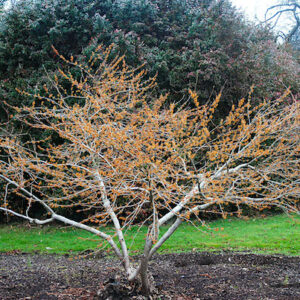


Hamamelis vernalis
Vernal Witch Hazel, Ozark Witch Hazel
$19.99 $15.99
- Main interest:
- early blooming, unique reddish-yellow fragrant flowers, good fall colour
- Exposure:
- full sun to full shade
- Soil humidity:
- moist soil; well drained
- Flower colour:
- red transitioning to yellow
- Fragrance:
- Fragrant
- Flowering period:
- March to April
- Foliage:
- green turning yellow in autumn
- USDA Hardiness:
- zone 4a: -34.5 °C (-30 °F) View Zone Map
- Mature height & width:
- height: 10 ft (3 m) width: 15 ft (4.6 m)
- Use:
- specimen, hedge, screen
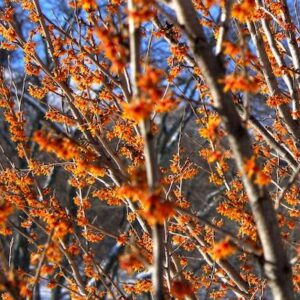
Vernal Witch Hazel (Hamamelis vernalis) is prized in cultivation for its intensely fragrant flowers that bloom in very early spring - sometimes as early as late winter when few other plants are awake. A deciduous large shrub or small tree, it typically reaches up to 3 m (10 ft) tall with an upright yet informal habit, featuring multiple crooked stems, distinctive zig-zag twigs, and an open crown. Mature stems develop an attractive gray to grayish-brown bark that is relatively smooth, while younger twigs are softly covered in velvety hairs, adding subtle seasonal texture.
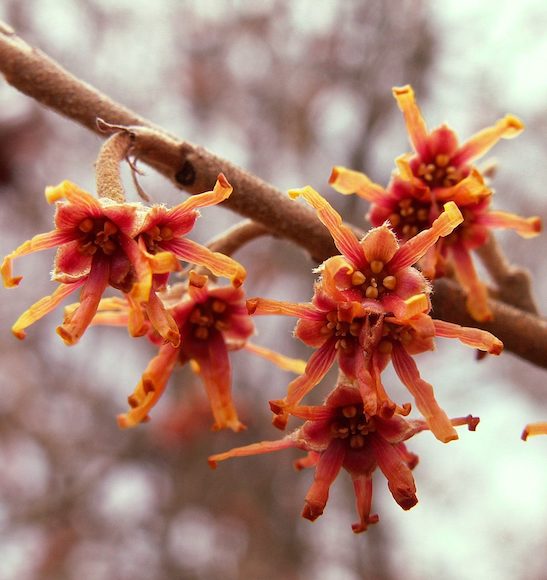
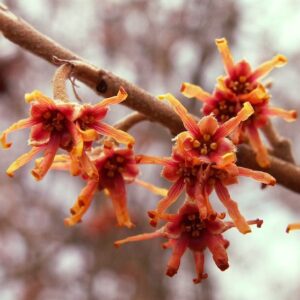
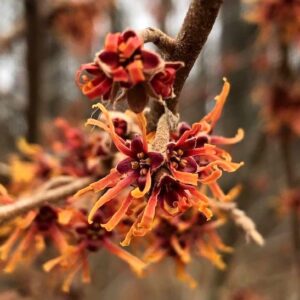
Its unique flowers appear in axillary clusters from March to April and are described as having a spicy scent. Each delicate 1.3 cm (½ in) bloom bears narrow, ribbon-like curled petals, that range from red at the base and transition to yellow at the tips - an early splash of color that signals the changing season.
The alternately arranged, ovate leaves feature broadly toothed margins and grow up to 7.5 cm (3 in) long. Emerging after flowering, they unfurl light green with attractive reddish-bronze tints in spring, maturing to a rich medium green through summer. Autumn colour develops late and is an attractive buttery to golden yellow colour. The dried leaves often persist well into winter for added interest. The non-showy fruit capsules mature in October and split, expelling black seeds that are attractive to birds.
In its native Ozark Plateau habitat (southern Missouri to Arkansas and Oklahoma), Ozark Witch Hazel is typically found in gravelly stream beds, at bases of rocky slopes along streams, and in rocky wooded hillsides. In the garden, it is remarkably adaptable and easy to grow, thriving in both full sun and partial shade, with best flowering achieved in full sun. Hamamelis vernalis prefers moist, well-drained soils and is hardy to Zone 4a (-34.5 °C).
Tough, durable, and deer resistant, Ozark Witch Hazel makes an excellent specimen for naturalized landscapes, shrub borders, or for use as a hedge or screen. Removing suckers is recommended to keep colonies in check, and it tolerates pruning well. With its early bloom time, evolving foliage, and subtle winter interest, Vernal Witch Hazel stands out as a reliable choice for true four-season appeal.
- Main interest:
- early blooming, unique reddish-yellow fragrant flowers, good fall colour
- Exposure:
- full sun to full shade
- Soil humidity:
- moist soil; well drained
- Flower colour:
- red transitioning to yellow
- Fragrance:
- Fragrant
- Flowering period:
- March to April
- Foliage:
- green turning yellow in autumn
- USDA Hardiness:
- zone 4a: -34.5 °C (-30 °F) View Zone Map
- Mature height & width:
- height: 10 ft (3 m) width: 15 ft (4.6 m)
- Use:
- specimen, hedge, screen
Vernal Witch Hazel (Hamamelis vernalis) is prized in cultivation for its intensely fragrant flowers that bloom in very early spring - sometimes as early as late winter when few other plants are awake. A deciduous large shrub or small tree, it typically reaches up to 3 m (10 ft) tall with an upright yet informal habit, featuring multiple crooked stems, distinctive zig-zag twigs, and an open crown. Mature stems develop an attractive gray to grayish-brown bark that is relatively smooth, while younger twigs are softly covered in velvety hairs, adding subtle seasonal texture.
Its unique flowers appear in axillary clusters from March to April and are described as having a spicy scent. Each delicate 1.3 cm (½ in) bloom bears narrow, ribbon-like curled petals, that range from red at the base and transition to yellow at the tips - an early splash of color that signals the changing season.
The alternately arranged, ovate leaves feature broadly toothed margins and grow up to 7.5 cm (3 in) long. Emerging after flowering, they unfurl light green with attractive reddish-bronze tints in spring, maturing to a rich medium green through summer. Autumn colour develops late and is an attractive buttery to golden yellow colour. The dried leaves often persist well into winter for added interest. The non-showy fruit capsules mature in October and split, expelling black seeds that are attractive to birds.
In its native Ozark Plateau habitat (southern Missouri to Arkansas and Oklahoma), Ozark Witch Hazel is typically found in gravelly stream beds, at bases of rocky slopes along streams, and in rocky wooded hillsides. In the garden, it is remarkably adaptable and easy to grow, thriving in both full sun and partial shade, with best flowering achieved in full sun. Hamamelis vernalis prefers moist, well-drained soils and is hardy to Zone 4a (-34.5 °C).
Tough, durable, and deer resistant, Ozark Witch Hazel makes an excellent specimen for naturalized landscapes, shrub borders, or for use as a hedge or screen. Removing suckers is recommended to keep colonies in check, and it tolerates pruning well. With its early bloom time, evolving foliage, and subtle winter interest, Vernal Witch Hazel stands out as a reliable choice for true four-season appeal.
Related products
-

Potentilla fruticosa 'Abbotswood'
Shrubby Cinquefoil 'Abbotswood' Out of stock Read more -
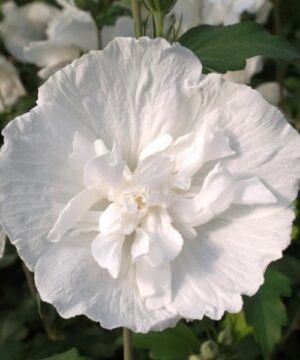
Hibiscus syriacus 'Double White'
Double White Rose of Sharon Out of stock Read more -
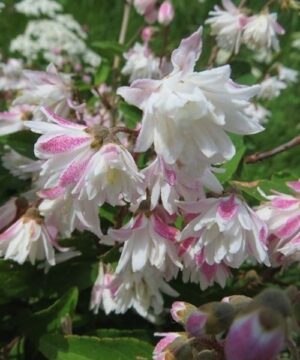
Deutzia x scabra 'Flore Pleno'
Fuzzy Deutzia$16.99$13.59 Read more This product has multiple variants. The options may be chosen on the product page -
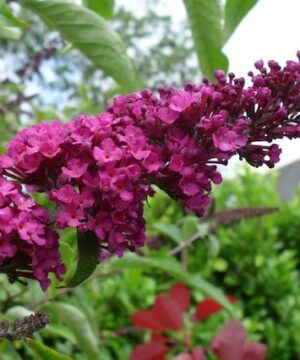
Buddleja davidii 'Royal Red'
Royal Red Butterfly Bush$17.99 - $47.99$14.39 - $38.39 Read more This product has multiple variants. The options may be chosen on the product page


