


Sambucus canadensis 'Nova'
Nova Elderberry, Nova American Elderberry, Nova Canadian Elderberry
$7.99
- Main interest:
- compact shrub, early blooming, sweet / tart black fruit, reliable yields, medicinal properties
- Exposure:
- full sun
- Soil humidity:
- moist soil; well-drained
- Flower colour:
- white
- Fragrance:
- Fragrant
- Flowering period:
- June to July
- Foliage:
- green
- USDA Hardiness:
- zone 3a: -40 °C (-40 °F) View Zone Map
- Mature height & width:
- height: 6 ft (1.8 m) width: 5 ft (1.5 m)
- Use:
- fruit production, edible garden, orchard, pollinator garden, specimen, hedge
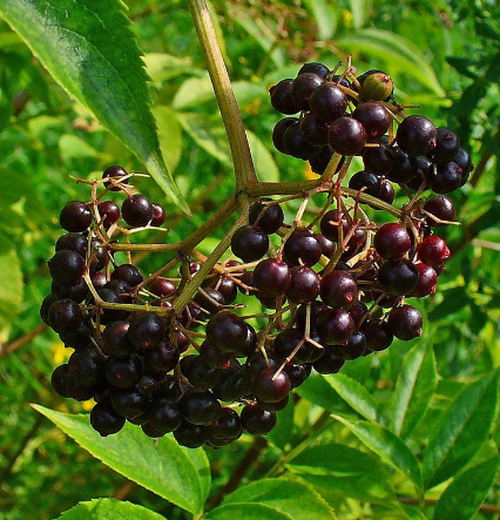
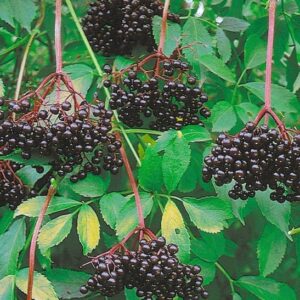
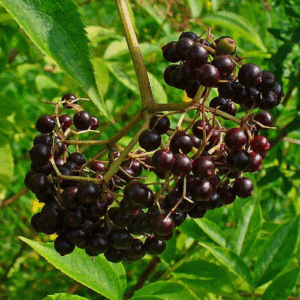
Nova Elderberry is a deciduous shrub that was selected for its reliable yields of delicious, medium sized, dark purple to black coloured berries. The sweet-flavoured fruit appear in drooping, bountiful bunches that ripen in September. Each shrub can produce up to 20 lbs. of fruit, annually. Sambucus canadensis 'Nova' is an early ripening variety. Nova Elderberry shrubs start producing fruits 2 to 3 years after planting.
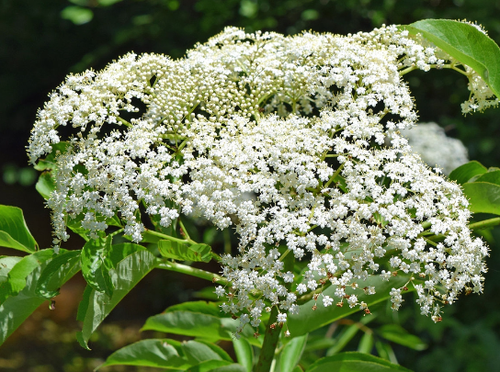
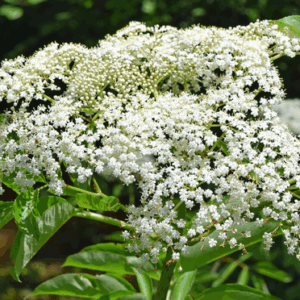
Beautiful, flat-topped clusters of charming, white flowers bloom in the spring, and give way to the tasty berries. Elderberry fruit is most popularly used in wines, pies, and jellies. Additionally, these berries are extremely healthful, being packed with vitamins and flavonoids. Syrup made from elderberry is said to stimulate the immune system.
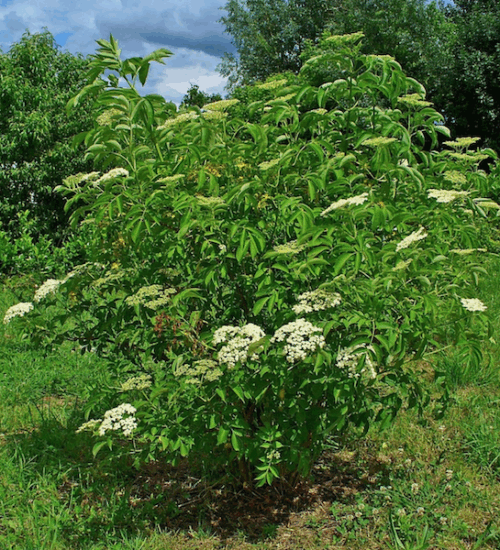
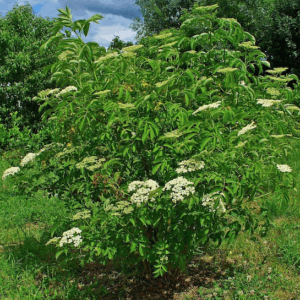
Nova American Elderberry is a slightly smaller variety of American Elderberry with thick stems and compound leaves. This compact shrub is easy to grow anywhere, but prefers moist areas with full sun for optimal fruit production. Nova Elderberry is self-fertile. However, planting multiple varieties of Sambucus canadensis will increase fruit yield. The nectar packed flower clusters are perfect for pollinator species, like bees, butterflies, and hummingbirds.
Nova Elderberry was released by Kentville AAFC Research and Development Centre in Nova Scotia in 1960, alongside the variety Scotia. It is grown commercially in Canada.
- Main interest:
- compact shrub, early blooming, sweet / tart black fruit, reliable yields, medicinal properties
- Exposure:
- full sun
- Soil humidity:
- moist soil; well-drained
- Flower colour:
- white
- Fragrance:
- Fragrant
- Flowering period:
- June to July
- Foliage:
- green
- USDA Hardiness:
- zone 3a: -40 °C (-40 °F) View Zone Map
- Mature height & width:
- height: 6 ft (1.8 m) width: 5 ft (1.5 m)
- Use:
- fruit production, edible garden, orchard, pollinator garden, specimen, hedge
Nova Elderberry is a deciduous shrub that was selected for its reliable yields of delicious, medium sized, dark purple to black coloured berries. The sweet-flavoured fruit appear in drooping, bountiful bunches that ripen in September. Each shrub can produce up to 20 lbs. of fruit, annually. Sambucus canadensis 'Nova' is an early ripening variety. Nova Elderberry shrubs start producing fruits 2 to 3 years after planting.
Beautiful, flat-topped clusters of charming, white flowers bloom in the spring, and give way to the tasty berries. Elderberry fruit is most popularly used in wines, pies, and jellies. Additionally, these berries are extremely healthful, being packed with vitamins and flavonoids. Syrup made from elderberry is said to stimulate the immune system.
Nova American Elderberry is a slightly smaller variety of American Elderberry with thick stems and compound leaves. This compact shrub is easy to grow anywhere, but prefers moist areas with full sun for optimal fruit production. Nova Elderberry is self-fertile. However, planting multiple varieties of Sambucus canadensis will increase fruit yield. The nectar packed flower clusters are perfect for pollinator species, like bees, butterflies, and hummingbirds.
Nova Elderberry was released by Kentville AAFC Research and Development Centre in Nova Scotia in 1960, alongside the variety Scotia. It is grown commercially in Canada.
Also known as: Nova American Elder, Nova Common Elderberry
Related products
-
Kolkwitzia amabilis 'Pink Cloud'
Beautybush 'Pink Cloud' $15.99 - $42.99 Read more This product has multiple variants. The options may be chosen on the product page -
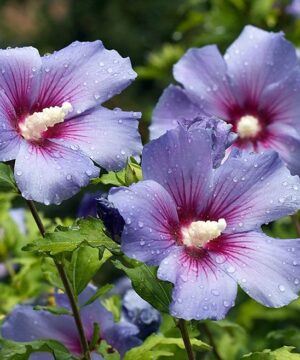
Hibiscus syriacus 'Blue Marlin'
Blue Marlin Rose of Sharon $49.99 Read more This product has multiple variants. The options may be chosen on the product page -

Hibiscus syriacus 'Double Purple'
Double Purple Rose of Sharon $15.99 Read more This product has multiple variants. The options may be chosen on the product page -
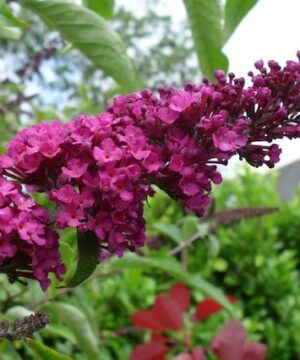
Buddleja davidii 'Royal Red'
Royal Red Butterfly Bush$15.99 - $42.99$11.99 - $42.99 Read more This product has multiple variants. The options may be chosen on the product page


