



Thuja occidentalis 'Smaragd'
Emerald Cedar, Emerald Green Arborvitae, Smaragd Cedar, Emerald Green Cedar
- Main interest:
- pyramidal, upright evergreen, slow grower, very hardy
- Exposure:
- full sun to partial shade
- Soil humidity:
- moist soil; well drained
- Fragrance:
- Mildly fragrant
- Foliage:
- green
- USDA Hardiness:
- zone 4a: -34.5 °C (-30 °F) View Zone Map
- Mature height & width:
- height: 15 ft (4.5 m) width: 4 ft (1.2 m)
- Use:
- hedge, screen, shrub border, vertical accent, specimen, container
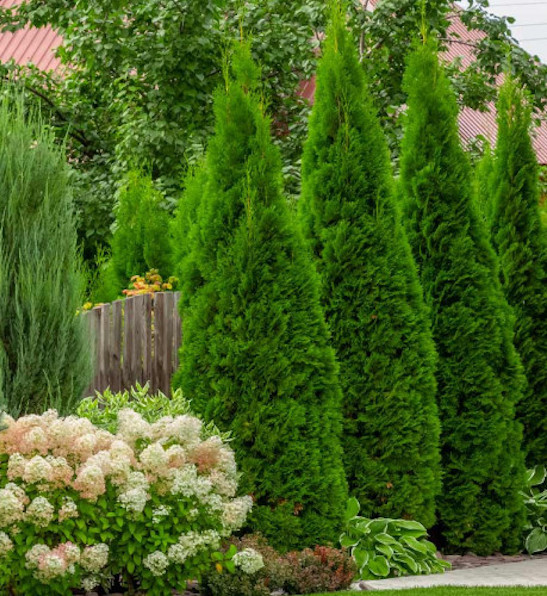
Emerald Cedar (Thuja occidentalis ‘Smaragd’), is a refined, upright evergreen prized for its narrow, pyramidal form and dense, vibrant emerald foliage. Also known as Emerald Green Cedar or Emerald Green Arborvitae, it is a recipient of the prestigious Royal Horticultural Society Award of Garden Merit, and remains one of the most popular and dependable cultivars of native Eastern White Cedar.
The aromatic glossy green, scale-like foliage of Smaragd Cedar grows in flat sprays and its small (1.2 cm) cones mature to a reddish-brown in autumn. The foliage is denser and brighter than ‘Holmstrup’ and it holds its rich colour better during the winter months. Smaragd Cedar provides valuable food and shelter for many bird species, but beware, some small mammals and deer may browse too!
Considered a semi-dwarf selection, Emerald Green Arborvitae grows slightly taller than ‘Holmstrup’, reaching approximately 5 m (15 ft) in height with a similar 1.2 m (4 ft) spread, and growth rate of about 30 cm (1 ft) per year. The branches of Emerald Green Cedar grow more vertically compared to most other cultivars, making it a preferred choice when a crisp, polished look and strong architectural form are desired.
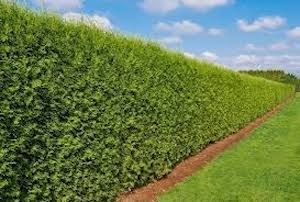
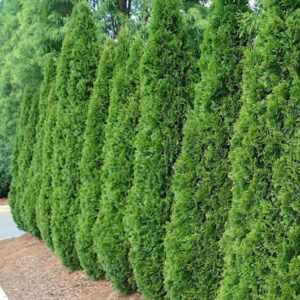
Emerald Cedar creates striking linear plantings and is perfect for formal screens, privacy hedges, and foundation plantings. Being narrow and compact, it is an excellent choice as a specimen and for container growing in landscapes where space is an issue. While pruning is not required to maintain its shape, it responds well to shaping and is a popular choice for spiral topiaries.
Thuja occidentalis ‘Smaragd’ thrives in full sun where it will maintain its fullness but will tolerate partial shade. It prefers moist, well-drained soil and does not tolerate drought. Hardy to zone 4a (-34.5 °C), it performs well in humid climates, but may be susceptible to damage from drying winds, so planting in a sheltered or protected location is recommended.
Low-maintenance, stately, and timeless, Emerald Green Cedar brings year-round structure, colour, and sophistication to any landscape.
- Main interest:
- pyramidal, upright evergreen, slow grower, very hardy
- Exposure:
- full sun to partial shade
- Soil humidity:
- moist soil; well drained
- Fragrance:
- Mildly fragrant
- Foliage:
- green
- USDA Hardiness:
- zone 4a: -34.5 °C (-30 °F) View Zone Map
- Mature height & width:
- height: 15 ft (4.5 m) width: 4 ft (1.2 m)
- Use:
- hedge, screen, shrub border, vertical accent, specimen, container
Emerald Cedar (Thuja occidentalis ‘Smaragd’), is a refined, upright evergreen prized for its narrow, pyramidal form and dense, vibrant emerald foliage. Also known as Emerald Green Cedar or Emerald Green Arborvitae, it is a recipient of the prestigious Royal Horticultural Society Award of Garden Merit, and remains one of the most popular and dependable cultivars of native Eastern White Cedar.
The aromatic glossy green, scale-like foliage of Smaragd Cedar grows in flat sprays and its small (1.2 cm) cones mature to a reddish-brown in autumn. The foliage is denser and brighter than ‘Holmstrup’ and it holds its rich colour better during the winter months. Smaragd Cedar provides valuable food and shelter for many bird species, but beware, some small mammals and deer may browse too!
Considered a semi-dwarf selection, Emerald Green Arborvitae grows slightly taller than ‘Holmstrup’, reaching approximately 5 m (15 ft) in height with a similar 1.2 m (4 ft) spread, and growth rate of about 30 cm (1 ft) per year. The branches of Emerald Green Cedar grow more vertically compared to most other cultivars, making it a preferred choice when a crisp, polished look and strong architectural form are desired.
Emerald Cedar creates striking linear plantings and is perfect for formal screens, privacy hedges, and foundation plantings. Being narrow and compact, it is an excellent choice as a specimen and for container growing in landscapes where space is an issue. While pruning is not required to maintain its shape, it responds well to shaping and is a popular choice for spiral topiaries.
Thuja occidentalis ‘Smaragd’ thrives in full sun where it will maintain its fullness but will tolerate partial shade. It prefers moist, well-drained soil and does not tolerate drought. Hardy to zone 4a (-34.5 °C), it performs well in humid climates, but may be susceptible to damage from drying winds, so planting in a sheltered or protected location is recommended.
Low-maintenance, stately, and timeless, Emerald Green Cedar brings year-round structure, colour, and sophistication to any landscape.
Synonym(s): Thuja occidentalis 'Emerald', Thuja occidentalis 'Emerald Green', Thuja occidentalis 'Emeraude'
Also known as: Smaragd Eastern White Cedar, Emerald Green Thuja, Emerald Green Columnar Cedar
Related products
-
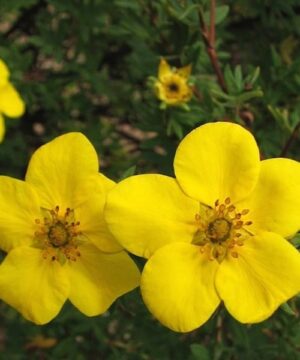
Potentilla fruticosa 'Goldstar'
Shrubby Cinquefoil 'Goldstar' $5.99 - $29.99 Read more This product has multiple variants. The options may be chosen on the product page -
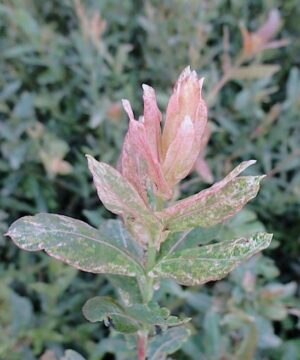
Salix integra 'Hakuro Nishiki'
Hakuro-nishiki Dappled Willow, Japanese Variegated Willow $14.99 Read more This product has multiple variants. The options may be chosen on the product page -
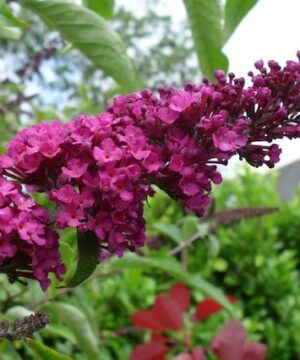
Buddleja davidii 'Royal Red'
Royal Red Butterfly Bush $15.99 - $42.99 Read more This product has multiple variants. The options may be chosen on the product page -

Hibiscus syriacus 'Double Purple'
Double Purple Rose of Sharon $15.99 Read more This product has multiple variants. The options may be chosen on the product page


