



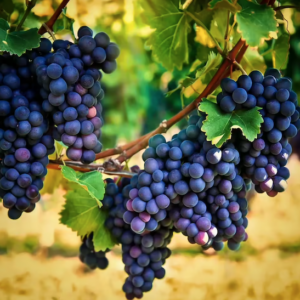
Vitis 'Concord' (late-season)
Concord Grape, Black Grape, Concord Grape Vine
$21.99 $17.59
- Main interest:
- tasty and sweet true 'grape' tasting fruit, large yields, seeded grape, very popular variety
- Exposure:
- full sun
- Soil humidity:
- moist soil; well drained
- Growth type:
- vine
- Flower colour:
- green
- Fragrance:
- Non-fragrant
- Flowering period:
- June
- Foliage:
- green
- USDA Hardiness:
- zone 4b: -31.5 °C (-25 °F) View Zone Map
- Mature height & width:
- height: 20 ft (6 m) width: 20 ft (6 m)
- Use:
- fruit production, edible garden, orchard, fence, trellis, patio, screen
Concord Grape (Vitis ‘Concord’) is the best-known commercial grape variety and is widely regarded as the standard of excellence for blue-black grapes. It is the parent of many grape cultivars developed for North America’s cooler climates and is the grape famously used for Welch’s® grape juice. First cultivated in the mid-1800s, Concord grape vine remains one of the oldest American grape varieties still in widespread production - a true testament to its enduring quality and popularity.
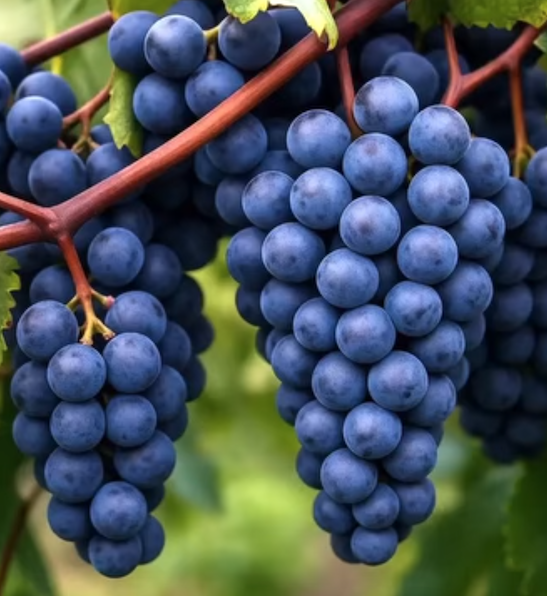
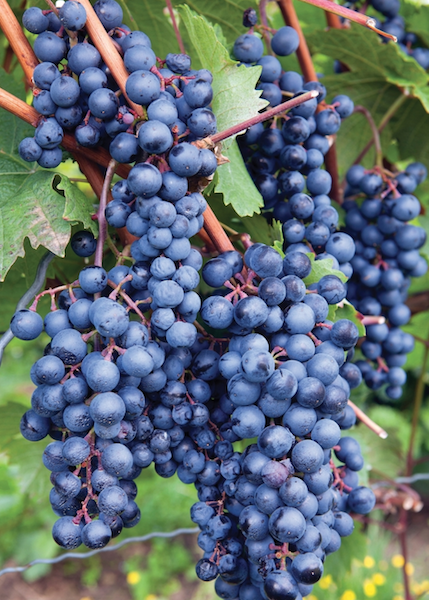
Concord grapes are medium to large, with berries averaging 2–3 cm in diameter and a round to slightly oval shape. The thick, smooth blue-black skin is mildly tart and slips easily from the flesh, classifying it as a slipskin variety. The translucent green flesh is soft, succulent, and sweet, delivering a rich, classic “grape” flavour. When eaten whole, the contrast between the firm skin and juicy flesh creates a distinctive bursting sensation in the mouth. Concord grapes contain seeds and often display a powdery bloom on the skin - similar to blueberries - which helps protect the fruit from moisture loss and cracking. When harvesting, select fully mature, plump grapes with a uniform deep blue-black colour and a sweet, musky, earthy aroma. They are excellent for fresh eating, preserves, juice, and wine making.
Concord Grape vine is a woody, deciduous, tendril-climbing vine grown primarily for its abundant edible fruit, though it also offers ornamental value in the landscape. Mildly fragrant clusters of greenish flowers appear in spring; they are self-pollinating and attractive to bees. The large, uniform black grape clusters are visually striking against the lush green foliage and readily attract birds and other wildlife. In autumn, the leaves turn yellow before dropping. This black seeded grape requires 1250 temperature degree-days (1250 daylight hours at 10 °C) to produce mature fruits. Concord is a late-season to very late-season grape variety, typically ripening in late September to early October.
This black grape performs best in full sun and moist, well-drained soil. Hardy to zone 4b (–31.5 °C), Concord is a vigorous, productive grape vine that requires sturdy support and is usually grown in a dedicated area due to its mature size and spread. It can be trained along fences, trellises, pergolas, or other rigid structures and may also be used as a hedge or screening plant. Fast-growing and long-lived, a Concord grapevine plant can be expected to produce fruit for approximately 20 years.
- Main interest:
- tasty and sweet true 'grape' tasting fruit, large yields, seeded grape, very popular variety
- Exposure:
- full sun
- Soil humidity:
- moist soil; well drained
- Growth type:
- vine
- Flower colour:
- green
- Fragrance:
- Non-fragrant
- Flowering period:
- June
- Foliage:
- green
- USDA Hardiness:
- zone 4b: -31.5 °C (-25 °F) View Zone Map
- Mature height & width:
- height: 20 ft (6 m) width: 20 ft (6 m)
- Use:
- fruit production, edible garden, orchard, fence, trellis, patio, screen
Concord Grape (Vitis ‘Concord’) is the best-known commercial grape variety and is widely regarded as the standard of excellence for blue-black grapes. It is the parent of many grape cultivars developed for North America’s cooler climates and is the grape famously used for Welch’s® grape juice. First cultivated in the mid-1800s, Concord grape vine remains one of the oldest American grape varieties still in widespread production - a true testament to its enduring quality and popularity.
Concord grapes are medium to large, with berries averaging 2–3 cm in diameter and a round to slightly oval shape. The thick, smooth blue-black skin is mildly tart and slips easily from the flesh, classifying it as a slipskin variety. The translucent green flesh is soft, succulent, and sweet, delivering a rich, classic “grape” flavour. When eaten whole, the contrast between the firm skin and juicy flesh creates a distinctive bursting sensation in the mouth. Concord grapes contain seeds and often display a powdery bloom on the skin - similar to blueberries - which helps protect the fruit from moisture loss and cracking. When harvesting, select fully mature, plump grapes with a uniform deep blue-black colour and a sweet, musky, earthy aroma. They are excellent for fresh eating, preserves, juice, and wine making.
Concord Grape vine is a woody, deciduous, tendril-climbing vine grown primarily for its abundant edible fruit, though it also offers ornamental value in the landscape. Mildly fragrant clusters of greenish flowers appear in spring; they are self-pollinating and attractive to bees. The large, uniform black grape clusters are visually striking against the lush green foliage and readily attract birds and other wildlife. In autumn, the leaves turn yellow before dropping. This black seeded grape requires 1250 temperature degree-days (1250 daylight hours at 10 °C) to produce mature fruits. Concord is a late-season to very late-season grape variety, typically ripening in late September to early October.
This black grape performs best in full sun and moist, well-drained soil. Hardy to zone 4b (–31.5 °C), Concord is a vigorous, productive grape vine that requires sturdy support and is usually grown in a dedicated area due to its mature size and spread. It can be trained along fences, trellises, pergolas, or other rigid structures and may also be used as a hedge or screening plant. Fast-growing and long-lived, a Concord grapevine plant can be expected to produce fruit for approximately 20 years.
Synonym(s): Vitis labrusca 'Concord'
Also known as: Concord Black Grape, Concord Seeded Grape, Concord Blue Grape, Purple Grape Plant, Black Seeded Grape, Concord Fox Grape, Black Table Grape, Concord Black Grape Tree, Concord Grape Plant, Concord Grapevine Plant
Related products
-
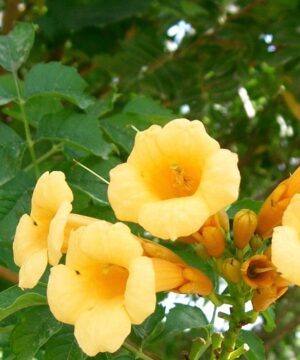
Campsis radicans 'Flava'
Yellow Trumpet Vine, Yellow Trumpet creeper, Cow vine, Hummingbird vine$17.99$14.39 Read more This product has multiple variants. The options may be chosen on the product page -
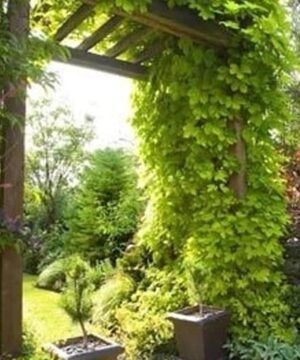
Humulus lupulus 'Bianca'
Bianca Golden Hops$17.99$14.39 Read more This product has multiple variants. The options may be chosen on the product page -
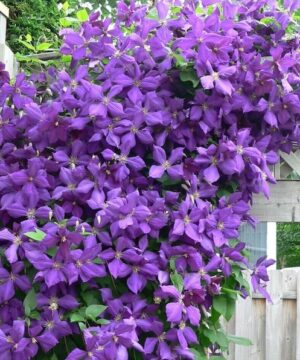
Clematis 'Jackmanii'
Jackman's Clematis, Late Large-flowered Clematis Out of stock Read more -
Humulus lupulus 'Nugget'
Nugget Hops Out of stock Read more


