




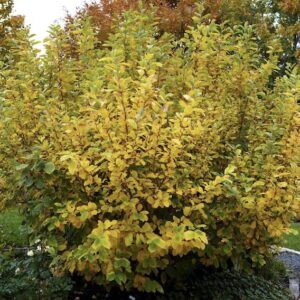

Hamamelis virginiana
American Witch Hazel, Common Witch Hazel, Winterbloom
$19.99
- Main interest:
- unique yellow fragrant flowers blooming in autumn, late season interest, good fall colour
- Exposure:
- full sun to full shade
- Soil humidity:
- moist soil; well drained
- Flower colour:
- yellow
- Fragrance:
- Fragrant
- Flowering period:
- October to November
- Foliage:
- green turning yellow in autumn
- USDA Hardiness:
- zone 3a: -40 °C (-40 °F) View Zone Map
- Mature height & width:
- height: 20 ft (6 m) width: 20 ft (6 m)
- Use:
- specimen, hedge, screen
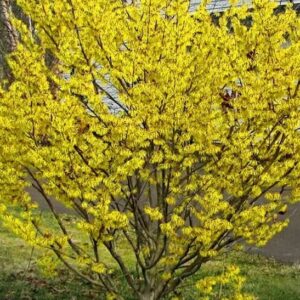
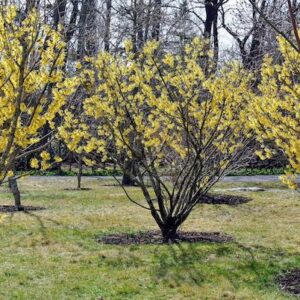
American Witch Hazel (Hamamelis virginiana) is a distinctive, fall-flowering native deciduous shrub or small tree, celebrated for its sculptural, often multi-trunked form and late-season appeal. Reaching up to 6 m (20 ft) in height and spread, it displays a picturesque, crooked branching habit - compact and dense in full sun, yet more open and graceful in shaded settings.
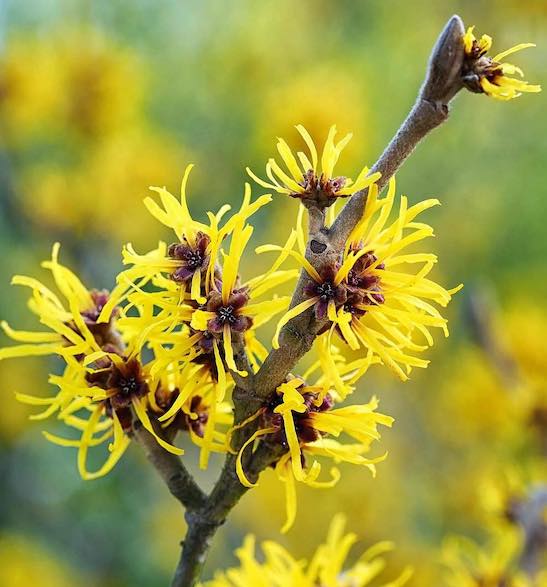
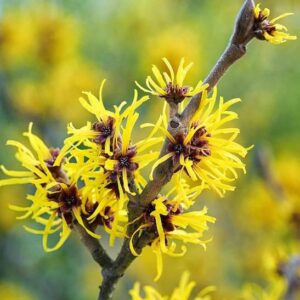
From October through November, clusters of fragrant, bright yellow flowers emerge along the bare grey branches. Each 2.5 cm (1 in) bloom displays four crinkled, ribbon-like petals, creating a striking display when most plants have long finished flowering. These showy blossoms provide an important late-season nectar source for pollinators and, in warmer years, blooms may even persist into December. (Temperatures below –10 °C will end the show.) For maximum flowering, plant the common Witch Hazel in a sunny location.
The green, oval leaves - reaching up to 15 cm (6 in) long - feature gently wavy margins and transition to warm shades of yellow in fall before dropping. Non-edible fruits mature into woody seed capsules that remain on the branches through winter. The following year, the capsules split open with surprising force, ejecting seeds up to 10 m (30 ft) away and are attractive to birds.
Common Witch Hazel thrives in moist, well drained soil – it is drought intolerant – and can be grown in full sun to full shade locations. Native to woodlands, forest margins and stream banks in natural environments, Hamamelis virginiana is very adaptable for garden landscapes. A salt tolerant shrub, specimens can be pruned into small trees, and can also be used for spring and summer screens or hedges. Remove suckers promptly if spread is not desired. An outstanding addition to winter gardens, native plantings, and pollinator gardens for four season interest.
American Witch Hazel tree also boasts a long history of practical use. Aromatic extracts from its leaves, twigs, and bark are naturally astringent and widely used in skincare products such as lotions, toners, and gels to soothe inflammation, reduce oil, and refine pores.
- Main interest:
- unique yellow fragrant flowers blooming in autumn, late season interest, good fall colour
- Exposure:
- full sun to full shade
- Soil humidity:
- moist soil; well drained
- Flower colour:
- yellow
- Fragrance:
- Fragrant
- Flowering period:
- October to November
- Foliage:
- green turning yellow in autumn
- USDA Hardiness:
- zone 3a: -40 °C (-40 °F) View Zone Map
- Mature height & width:
- height: 20 ft (6 m) width: 20 ft (6 m)
- Use:
- specimen, hedge, screen
American Witch Hazel (Hamamelis virginiana) is a distinctive, fall-flowering native deciduous shrub or small tree, celebrated for its sculptural, often multi-trunked form and late-season appeal. Reaching up to 6 m (20 ft) in height and spread, it displays a picturesque, crooked branching habit - compact and dense in full sun, yet more open and graceful in shaded settings.
From October through November, clusters of fragrant, bright yellow flowers emerge along the bare grey branches. Each 2.5 cm (1 in) bloom displays four crinkled, ribbon-like petals, creating a striking display when most plants have long finished flowering. These showy blossoms provide an important late-season nectar source for pollinators and, in warmer years, blooms may even persist into December. (Temperatures below –10 °C will end the show.) For maximum flowering, plant the common Witch Hazel in a sunny location.
The green, oval leaves - reaching up to 15 cm (6 in) long - feature gently wavy margins and transition to warm shades of yellow in fall before dropping. Non-edible fruits mature into woody seed capsules that remain on the branches through winter. The following year, the capsules split open with surprising force, ejecting seeds up to 10 m (30 ft) away and are attractive to birds.
Common Witch Hazel thrives in moist, well drained soil – it is drought intolerant – and can be grown in full sun to full shade locations. Native to woodlands, forest margins and stream banks in natural environments, Hamamelis virginiana is very adaptable for garden landscapes. A salt tolerant shrub, specimens can be pruned into small trees, and can also be used for spring and summer screens or hedges. Remove suckers promptly if spread is not desired. An outstanding addition to winter gardens, native plantings, and pollinator gardens for four season interest.
American Witch Hazel tree also boasts a long history of practical use. Aromatic extracts from its leaves, twigs, and bark are naturally astringent and widely used in skincare products such as lotions, toners, and gels to soothe inflammation, reduce oil, and refine pores.
Synonym(s): Hamamelis macrophylla
Also known as: Wych Hazel, Virginia Witch Hazel, Snapping Hazelnut
Related products
-

Deutzia crenata 'Nikko'
Nikko Slender Deutzia $15.99 - $42.99 Read more This product has multiple variants. The options may be chosen on the product page -
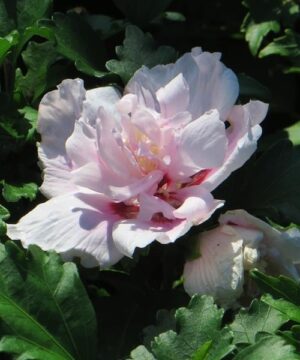
Hibiscus syriacus 'Double Pink'
Double Pink Rose of Sharon tree Out of stock Read more -
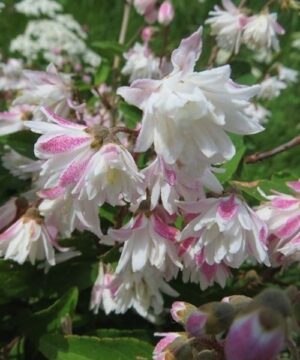
Deutzia x scabra 'Flore Pleno'
Fuzzy Deutzia $14.99 Read more This product has multiple variants. The options may be chosen on the product page -

Hibiscus syriacus 'Double Purple'
Double Purple Rose of Sharon $15.99 Read more This product has multiple variants. The options may be chosen on the product page


