




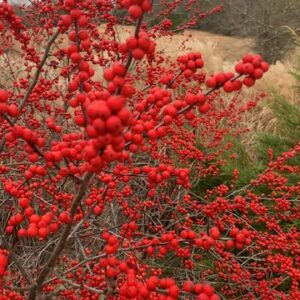


Ilex verticillata 'Winter Red'
Winter Red Winterberry plant, Winter Red Winterberry Holly, Female Winterberry
- Main interest:
- heavy fruiting branches of bright red fruit, retention of fruit through winter
- Exposure:
- full sun to partial shade
- Soil humidity:
- moist to wet soil
- Flower colour:
- white
- Fragrance:
- Non-fragrant
- Flowering period:
- June to July
- Foliage:
- dark green
- USDA Hardiness:
- zone 3a: -40 °C (-40 °F) View Zone Map
- Mature height & width:
- height: 10 ft (3 m) width: 8 ft (2.4 m)
- Use:
- hedge, cut flower garden, rain garden, pond margin, stream bed, specimen
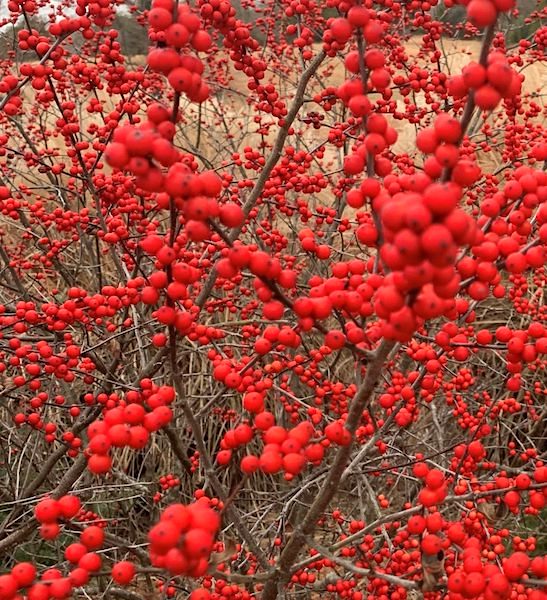
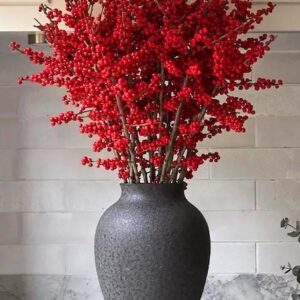
Winter Red Winterberry plant (Ilex verticillata ‘Winter Red’) is renowned for its profuse display of bright red fruit that persists beautifully on the branches throughout winter. Grown primarily for its outstanding ornamental value, the vivid, showy berries add striking interest to the winter landscape. A cultivar of the native winterberry holly, Winter Red Winterberry also provides an important cold-season food source for a variety of birds and mammals. The showy, berry-laden branches are frequently harvested for use in floral arrangements.
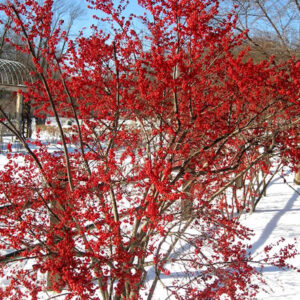
This multi-stemmed deciduous shrub has an upright, rounded habit and a slow growth rate, with a tendency to sucker and form colonies. Winter Red Winterberry plant typically reaches 3 m (10 ft) in both height and width. Winter Red Winterberry Holly thrives in full sun to part shade and prefers moist to wet, acidic soils; it will even tolerate occasional standing water. The dark green, glossy leaves are mildly serrated and measure 7.5–12.5 cm in length, turning bronze and then yellow in autumn before dropping. Inconspicuous white flowers appear in the leaf axils in June and July on this late-flowering cultivar.
Winter Red Winterberry is a female plant and requires a male pollinator to produce fruit. Planting a nearby Ilex verticillata (seedling) will ensure a heavy crop of bright red berries (technically drupes) in the fall. Generally, one male winterberry will be sufficient for pollinating up to 10 Winter Red female Winterberry.
Winter Red Winterberry shrub is an excellent choice for mass plantings, hedges, rain gardens, pollinator gardens and winter gardens or as a striking specimen. Prune in early spring before new growth emerges to maintain shape. Few plants rival Ilex verticillata ‘Winter Red’ for its spectacular berry display beginning in fall, bringing vibrant colour and life to the landscape during the long Canadian winter.
Note: Despite winterberries are a good food source for birds and mammals, they are mildly toxic to humans. Don't eat, just admire!
- Main interest:
- heavy fruiting branches of bright red fruit, retention of fruit through winter
- Exposure:
- full sun to partial shade
- Soil humidity:
- moist to wet soil
- Flower colour:
- white
- Fragrance:
- Non-fragrant
- Flowering period:
- June to July
- Foliage:
- dark green
- USDA Hardiness:
- zone 3a: -40 °C (-40 °F) View Zone Map
- Mature height & width:
- height: 10 ft (3 m) width: 8 ft (2.4 m)
- Use:
- hedge, cut flower garden, rain garden, pond margin, stream bed, specimen
Winter Red Winterberry plant (Ilex verticillata ‘Winter Red’) is renowned for its profuse display of bright red fruit that persists beautifully on the branches throughout winter. Grown primarily for its outstanding ornamental value, the vivid, showy berries add striking interest to the winter landscape. A cultivar of the native winterberry holly, Winter Red Winterberry also provides an important cold-season food source for a variety of birds and mammals. The showy, berry-laden branches are frequently harvested for use in floral arrangements.
This multi-stemmed deciduous shrub has an upright, rounded habit and a slow growth rate, with a tendency to sucker and form colonies. Winter Red Winterberry plant typically reaches 3 m (10 ft) in both height and width. Winter Red Winterberry Holly thrives in full sun to part shade and prefers moist to wet, acidic soils; it will even tolerate occasional standing water. The dark green, glossy leaves are mildly serrated and measure 7.5–12.5 cm in length, turning bronze and then yellow in autumn before dropping. Inconspicuous white flowers appear in the leaf axils in June and July on this late-flowering cultivar.
Winter Red Winterberry is a female plant and requires a male pollinator to produce fruit. Planting a nearby Ilex verticillata (seedling) will ensure a heavy crop of bright red berries (technically drupes) in the fall. Generally, one male winterberry will be sufficient for pollinating up to 10 Winter Red female Winterberry.
Winter Red Winterberry shrub is an excellent choice for mass plantings, hedges, rain gardens, pollinator gardens and winter gardens or as a striking specimen. Prune in early spring before new growth emerges to maintain shape. Few plants rival Ilex verticillata ‘Winter Red’ for its spectacular berry display beginning in fall, bringing vibrant colour and life to the landscape during the long Canadian winter.
Note: Despite winterberries are a good food source for birds and mammals, they are mildly toxic to humans. Don't eat, just admire!
Also known as: Winter Red Holly, Winter Red Winterberry Tree, Winter Red Winterberry Shrub, Red Winterberry plant, Winter Red Michigan Holly, Common Winterberry, Swamp Winterberry, Virginia Winterberry
Related products
-
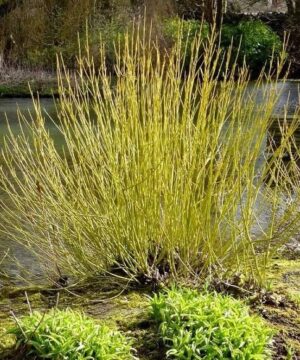
Cornus sericea 'Flaviramea'
Yellow-Twig Dogwood, Golden-Twig Dogwood Out of stock Read more -
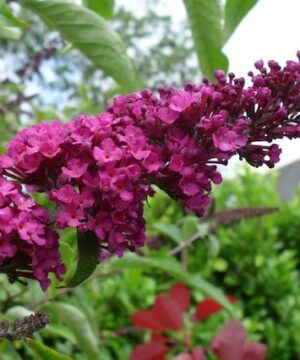
Buddleja davidii 'Royal Red'
Royal Red Butterfly Bush$17.99 - $47.99$14.39 - $38.39 Read more This product has multiple variants. The options may be chosen on the product page -

Ligustrum x vicaryi
Vicary Golden Privet Out of stock Read more -

Euonymus alatus
Burning Bush$17.99$14.39 Read more This product has multiple variants. The options may be chosen on the product page


